The short answer
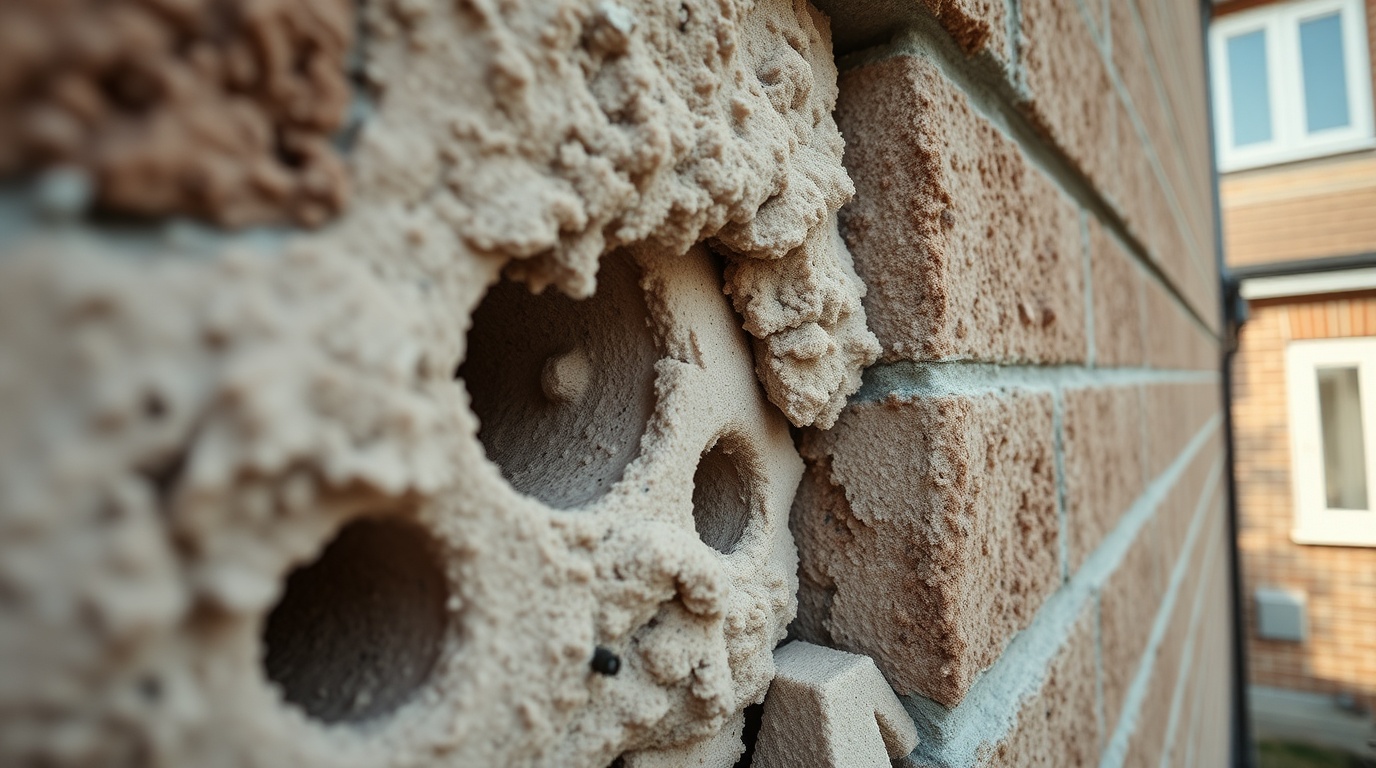
Yes — cavity wall insulation can cause damp, though it does not always. A correctly specified and installed fill in a suitable property normally performs well. Problems tend to arise where insulation has been installed badly, slumped, or fitted into a property that was not suitable for it — for example homes that are very exposed to wind-driven rain, or that have a narrow, debris-filled or already-damp cavity. In those cases the insulation can bridge the gap between the outer and inner walls, giving moisture a path across to the inside, which shows up as damp patches and mould. Where that has happened, clearing the cavity removes the bridge so the gap can do its original job of keeping the inner wall dry.
The honest answer is 'sometimes'. Cavity wall insulation is not inherently a damp problem, but in the wrong property or when installed poorly it can become one. Here is when, and why, it goes wrong.
When damp risk rises
- Exposed locationwind-driven rain
- Poor installationuneven or slumped fill
- Unsuitable propertynarrow or debris-filled cavity
- Pre-existing dampor defects in the outer wall
- The mechanismfill bridges the cavity
- The fixclear the cavity
How insulation lets damp across
An empty cavity works partly as a barrier: the outer wall can get wet from rain, but the air gap stops that moisture reaching the inner wall. When insulation is added, it fills that gap — and if it is poorly installed, has slumped, contains gaps, or has absorbed water, it can form a continuous bridge of damp material from the outer leaf to the inner one. In an exposed location with a lot of wind-driven rain, or where the cavity is narrow, full of mortar debris or already damp, that bridging is far more likely. The result is the classic pattern of damp patches and mould on internal walls, often worst on the weather-facing elevation.
| Factor | Effect on damp risk |
|---|---|
| Exposed / coastal site | higher — more wind-driven rain |
| Poor or uneven installation | higher — gaps and bridging |
| Narrow or debris-filled cavity | higher — easier to bridge |
| Suitable property, good install | lower — usually performs well |
General guidance on factors that raise damp risk. Source: Property Care Association.
What to do if you suspect it
Because damp can have other causes — condensation, penetrating damp through the outer wall, or plumbing leaks — the first step is a borescope survey to see whether the insulation is actually bridging or wet. If it is, extraction clears the cavity and restores the air gap, after which any remaining damp and the outer wall can be addressed. If the insulation was installed under a guarantee, the survey findings also matter when you look into the CIGA route covered on the claims page.
Frequently asked questions
Can cavity wall insulation cause damp?
It can, though it does not always. In a suitable property with a good installation it usually performs well. Damp problems tend to arise where insulation is poorly installed, has slumped, or has been fitted into an exposed or unsuitable property, allowing it to bridge the cavity and let moisture across to the inner wall.
Which homes are most at risk of insulation-related damp?
Properties very exposed to wind-driven rain, and those with narrow, debris-filled or already-damp cavities, are more at risk because the insulation is more likely to bridge the gap and carry moisture inward.
Does removing the insulation cure the damp?
Removing it clears the bridge so the cavity can keep the inner wall dry again, but it does not on its own dry out an already-wet wall or fix a defect in the outer leaf. A specialist will set out any drying and repair needed alongside extraction.
Sources & further reading
- Property Care Association — cavity wall insulation issues
- MyJobQuote — cavity wall insulation cost guide
Figures on this page are typical UK ranges drawn from published sources and depend on your specific property. They are guidance, not a quotation.