The short answer
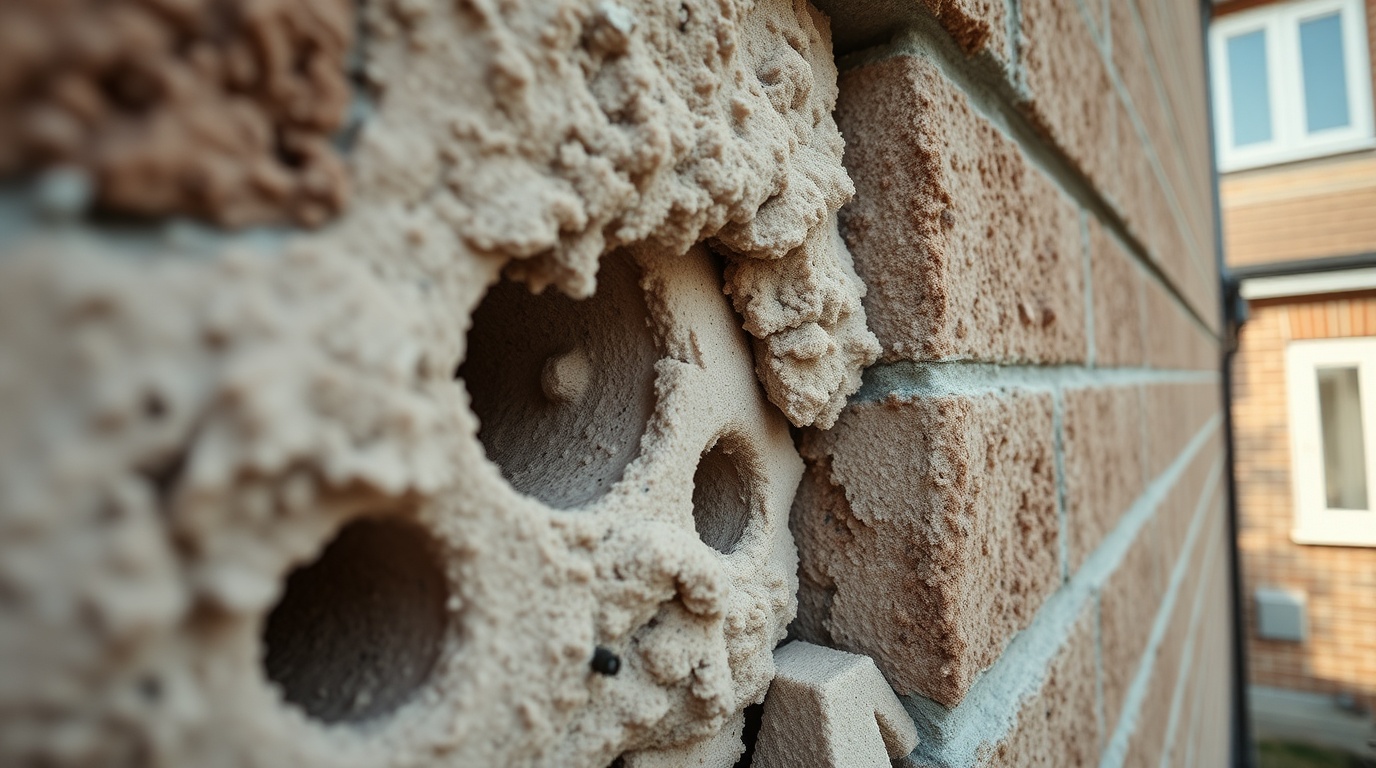
When retrofit cavity wall insulation fails, the first and most common sign is almost always internal dampness — damp patches on inside walls, often on the side most exposed to wind-driven rain. Other warning signs include mould or mildew, cold spots on walls, condensation, peeling paint or wallpaper, a musty smell, and heating bills creeping up as the insulation stops performing. These point to insulation that has slumped, bridged the cavity or absorbed water, letting moisture cross from the outer leaf to the inner wall. The only reliable way to confirm it is a borescope survey, where a specialist inspects inside the cavity to see the condition of the fill.
Failed insulation often shows up as damp long before anyone connects it to the cavity. Knowing the signs — and getting the cavity surveyed rather than guessed — helps you act before water reaches plaster and timber.
Common warning signs
- Damp patchesoften on the weather side
- Mould or mildewinternal walls
- Cold spotsuneven wall temperature
- Condensationand a musty smell
- Rising billsinsulation underperforming
- Confirm witha borescope survey
What failure looks like inside
Failed cavity wall insulation usually announces itself indoors. Watch for damp patches on internal walls (frequently on the elevation that takes the most rain), black mould or mildew, persistent condensation, a musty smell, peeling paint or wallpaper, visibly cold patches on the wall, and heating costs that have crept up without an obvious reason. Any of these can mean the insulation has slumped, settled unevenly or soaked up water, so it is no longer keeping the cavity dry.
Why a survey matters before you act
Damp has several possible causes, so the signs above do not always mean the insulation is to blame — which is exactly why a borescope survey is the sensible first step. A specialist drills a small inspection hole and uses a camera to see inside the cavity, checking whether the insulation has slumped, bridged the gap or absorbed water. That tells you whether extraction is genuinely needed, rather than removing insulation on a hunch. If the survey confirms the fill has failed, it also documents the condition, which is useful if you later look into a guarantee or claim.
Frequently asked questions
What are the signs of failed cavity wall insulation?
The most common sign is internal damp patches, often on the weather-facing wall. Others include mould or mildew, cold spots, condensation, a musty smell, peeling paint or wallpaper, and rising heating bills. A borescope survey confirms whether the insulation in the cavity has failed.
How do I know if damp is caused by cavity wall insulation?
You can't tell for certain from the inside alone, because damp has several causes. A specialist carries out a borescope survey, inspecting inside the cavity to see whether the insulation has slumped, bridged the gap or absorbed water before recommending removal.
Can failed cavity wall insulation increase my heating bills?
It can. When insulation slumps, settles unevenly or gets wet, it stops performing as intended, which can show up as cold spots and gradually rising heating costs alongside any damp signs.
Sources & further reading
- Property Care Association — cavity wall insulation issues
- Checkatrade — cavity wall insulation removal cost
Figures on this page are typical UK ranges drawn from published sources and depend on your specific property. They are guidance, not a quotation.