The short answer
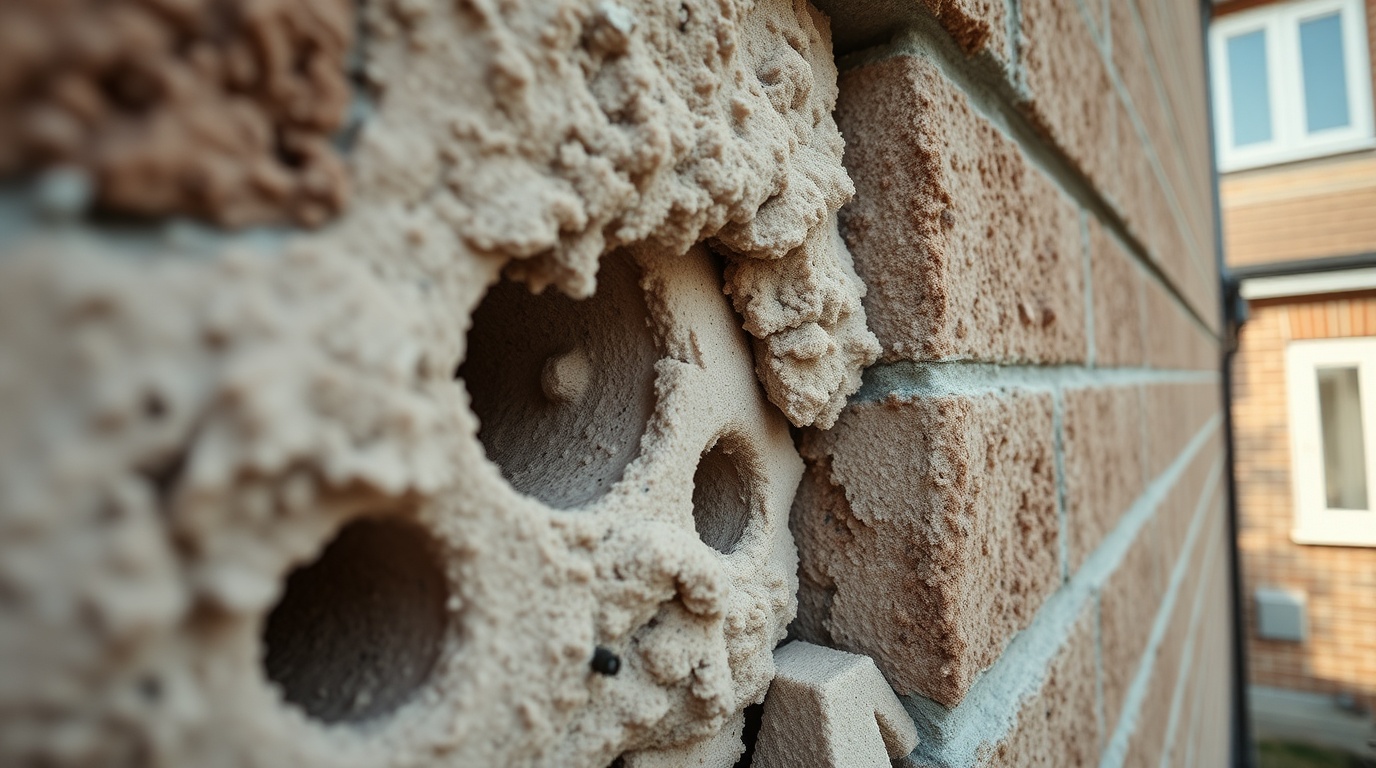
Yes, cavity wall insulation can cause mould on internal walls, but it does so indirectly. When fill slumps, saturates or bridges the cavity, it creates a cold spot on the inner surface of the wall. Warm, moist household air then condenses on that cold patch, and the persistent dampness lets black mould (commonly Aspergillus and Cladosporium species) grow — typically in corners, behind furniture and low on outside-facing walls. The insulation is not the food source; the cold, damp surface it creates is. This is why mould from failed fill tends to follow the cold pattern across weather-facing elevations, rather than appearing evenly. Working insulation usually reduces mould by keeping walls warm.
Mould needs a damp surface and a little warmth, and a failed cavity supplies exactly that by chilling the wall. The detail below explains the chain and how to separate it from ordinary lifestyle condensation.
Mould chain
- Triggercold spot from failed fill
- Mechanismcondensation on cold surface
- Wherecorners, behind furniture, low walls
- Typeblack surface mould
- Working fillusually reduces mould
How a cold spot breeds mould
Mould growth on a wall depends on surface relative humidity staying high for long periods. When part of a wall is colder than the surrounding plaster — because the cavity fill behind it has slumped or gone wet — the air touching that cold patch cools, its relative humidity climbs toward saturation, and moisture deposits on the surface. Even without visible dripping condensation, a surface that sits above roughly 80% relative humidity for hours each day is enough for spores to germinate. The result is the familiar black speckling that starts in the coldest spots: corners, which lose heat from two directions at once and so run coldest of all; behind wardrobes and along skirtings, where there is no air movement to dry the surface; and along the bottom of external walls, where the inner leaf is closest to the cooler ground. The mould does not need a flood of water — only a surface that stays damp enough, long enough. That is why it can appear on a wall that feels merely cool and slightly clammy rather than obviously wet, and why it is so often mistaken for a cosmetic problem to be painted over rather than the visible end of a heat-loss and moisture chain that begins inside the cavity.
Failed fill versus lifestyle condensation
Not all wall mould is the insulation's fault. Lifestyle condensation — from drying washing indoors, unvented showers, or low ventilation — produces mould too, usually spread more widely around the home and worst in bathrooms and bedrooms. Mould driven by failed cavity fill is more localised: it tracks the cold zones on outside-facing walls, often in the same place a thermal camera shows a cold patch, and frequently appeared after the cavity was filled. A useful clue is how the mould behaves with the seasons and the weather: lifestyle condensation peaks in cold months when windows stay shut and washing dries indoors, while failed-fill damp often worsens specifically after spells of wind-driven rain on the exposed elevation, because rain bridging a saturated cavity adds penetrating moisture on top of the condensation. Another is consistency of position — failed-fill mould keeps returning to the same patch over a buried cold bridge, whereas lifestyle mould tends to move around to whichever surface is coldest and least ventilated at the time. Telling them apart matters because the remedy differs — ventilation and heating for the first, cavity inspection and possibly extraction for the second — and because spending on the wrong one leaves the wall growing mould while the bills mount.
| Feature | Failed-fill mould | Lifestyle condensation |
|---|---|---|
| Location | cold spots on external walls | widespread, wet rooms |
| Pattern | matches thermal cold zones | near moisture sources |
| Onset | often after fill installed | linked to habits / season |
| Fix | inspect / extract cavity | ventilation and heating |
Indicative guidance. Source: Property Care Association.
Why working insulation cuts mould
It is worth stating the other side: a sound, dry cavity fill usually reduces mould rather than causing it. By keeping the inner surface of the wall warmer, good insulation lifts the surface temperature above the point where condensation forms, so the air no longer dumps its moisture on the plaster. Many homes see less mould after correct cavity insulation for exactly this reason. Mould therefore points to a problem with the insulation — slumping, saturation or bridging — not to the principle of filling the cavity. The honest test is whether the mould sits over a genuine cold spot and whether that cold spot is caused by failed fill.
Breaking the mould cycle for good
Clearing mould durably means tackling all three things it depends on: a cold surface, moisture in the air, and still, undisturbed conditions at the wall. Where failed cavity fill is the cause, the cold surface is the part you cannot fix with housekeeping alone — the only way to warm that patch back up is to restore the insulation, which usually means extracting the failed fill so the cavity can be re-insulated correctly. Alongside that, reducing the moisture load makes a real difference: using extractor fans during and after cooking and showering, drying washing outdoors or in a vented space, keeping trickle vents open, and maintaining a steady gentle background heat rather than short hot bursts. Pulling furniture a few centimetres off external walls lets air circulate and stops the dead-air pocket where mould thrives. After cleaning the existing growth with an appropriate fungicidal wash, these measures keep new spores from re-establishing. The order matters: if you only clean and ventilate but leave a genuine cold spot from failed fill in place, the wall will keep collecting moisture there and the mould will return; if you only warm the wall but leave indoor humidity high, condensation will simply move to the next coldest surface. Addressing the cavity fault and the moisture balance together is what actually ends the cycle.
Frequently asked questions
Is the mould dangerous to health?
Persistent indoor mould can irritate airways and worsen asthma and allergies, especially in children and older or vulnerable people. The growth should be cleaned and, more importantly, the damp cause removed so it does not return.
How can I tell if the mould is from the cavity or from condensation?
Failed-fill mould usually sits over cold spots on outside-facing walls and often started after the cavity was filled, while lifestyle condensation is more widespread and tied to wet rooms and habits. A thermal survey helps confirm which.
Will improving ventilation alone stop it?
Better ventilation and heating help with condensation generally, but if a genuine cold spot from failed fill remains, the wall will keep collecting moisture there. The cavity itself usually needs inspecting and, if failed, extracting.
Sources & further reading
Figures on this page are typical UK ranges drawn from published sources and depend on your specific property. They are guidance, not a quotation.