The short answer
Yes, you may be able to claim where damp has been caused by a defect in cavity wall insulation — most often fill that bridges the cavity and lets moisture cross from the outer to the inner wall. A claim can cover putting the defect right (often extracting the fill) and, depending on the route, related costs such as repairing damaged plaster and decoration. The key is proving causation: a survey, damp readings and a borescope inspection showing the insulation is responsible, and ruling out unrelated causes like a leaking gutter or rising damp. Routes include the CIGA guarantee, a claim against the installer, or — if paid on credit — the finance provider. Compensation is about remedying loss, not a fixed payout, and figures vary case by case.
Damp is the most common reason people look at a cavity insulation claim. Whether it succeeds turns on cause and evidence, set out below.
Damp claim essentials
- Common causefill bridging the cavity
- Key testproving the insulation did it
- Can coverextraction + making good
- Main routeCIGA guarantee
- Rule outgutters, roof, rising damp
How cavity insulation causes damp
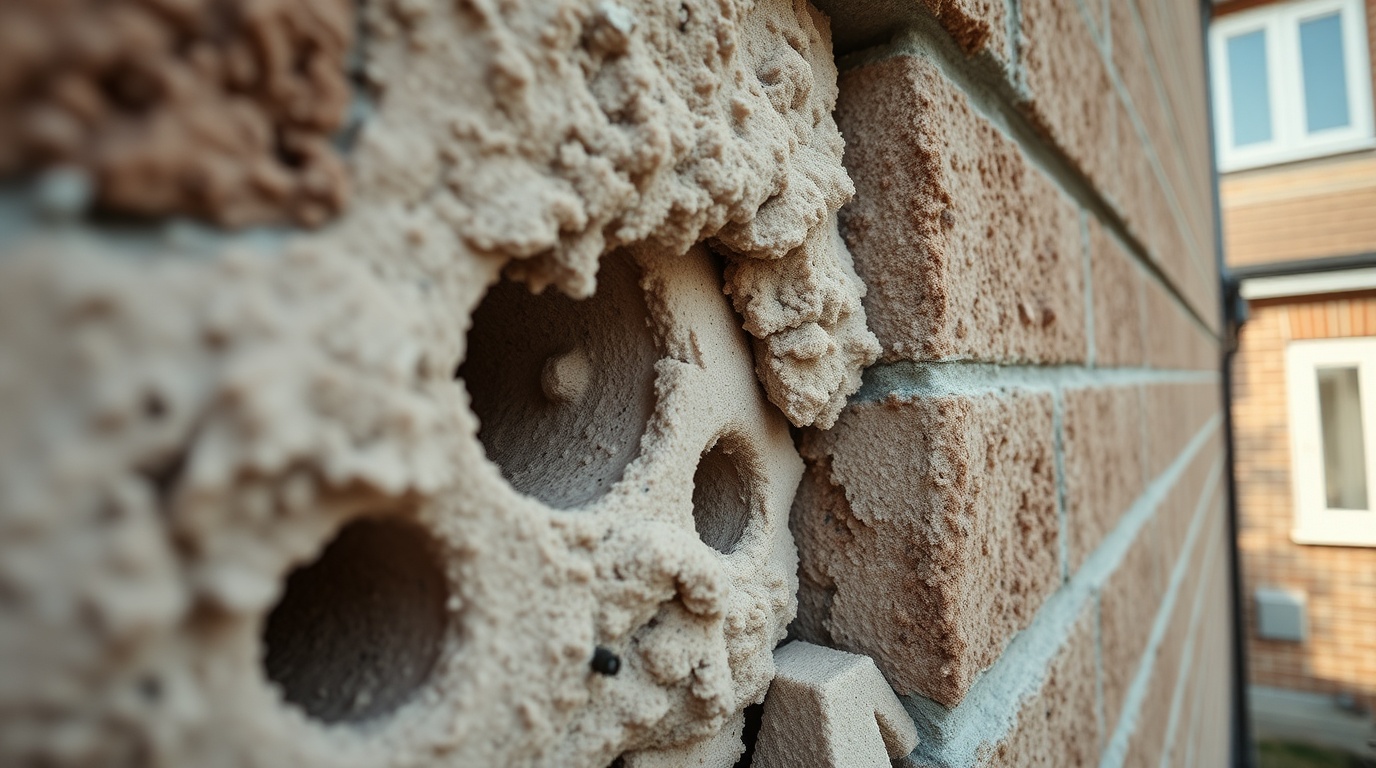
A clear cavity exists to stop rain that soaks the outer leaf of brickwork from reaching the inner leaf. When insulation is fitted poorly, or in a property exposed to driving rain, the fill can bridge the cavity and create a path for that moisture to cross to the inside. The result is damp patches, staining, mould and a cold, wet inner wall. Other defect patterns include fill that has slumped leaving uneven coverage, and material blocking weep holes or air bricks so trapped moisture cannot escape. These are the failures a damp claim is usually built on, because they tie the moisture directly to the insulation work.
Exposure is central to many of these cases. Parts of the UK that face frequent wind-driven rain place far greater demands on a wall, and a cavity filled in such a location without proper assessment is more likely to track moisture inward. Industry guidance recognises exposure zones for exactly this reason, and a wall judged unsuitable yet filled anyway is itself a recognised defect rather than simple bad luck. This is why a damp claim often turns not only on the physical condition of the fill, but on whether the property should ever have been filled in the first place — a question a competent survey can address.
Proving the insulation is to blame
Compensation depends on evidence that the insulation, not something else, caused the damp:
- A surveyor's report diagnosing the type of damp and its source.
- Damp meter readings showing affected areas on the inner wall.
- A borescope inspection viewing the fill inside the cavity through small drilled holes.
- Photographs of staining, mould and external exposure.
- Ruling out other causes — gutters, downpipes, roof, pointing, rising damp.
| Evidence | What it shows | Why it matters |
|---|---|---|
| Survey report | type and source of damp | establishes cause |
| Damp readings | moisture on inner wall | confirms severity |
| Borescope | fill condition in cavity | links to insulation |
| Exposure check | driving-rain risk | suitability question |
Indicative evidence for guidance. Sources: CIGA; PCA damp guidance.
What compensation can cover
Compensation is about remedying the loss the defect caused, not a set figure. Under the CIGA guarantee the focus is on putting the defect right — typically extracting the failed fill, drying the cavity and making good. Where you claim against an installer for breach of contract or negligence, or against a finance provider, the scope can extend to consequential losses directly flowing from the defect, such as repairing damaged plaster and redecorating, within what the law and the agreement allow. There is no standard amount; the figure reflects the actual cost of remedy and any provable related loss. Avoid expecting a fixed payout — claims are assessed on the specific damage.
Be cautious of any suggestion that a particular sum is owed before anyone has assessed your wall. Unsolicited approaches sometimes quote large, specific figures to encourage people to sign up, but a genuine claim is valued on the real cost of remedy and the damage actually caused, which can only be known after inspection. For a guarantee claim the practical outcome is usually the remedial work itself rather than a cash payment, while a contractual or negligence claim against a trading party may recover provable related costs. Either way, the honest expectation is reimbursement of real loss, not a windfall.
Choosing the right route
The route shapes what you can recover. If the work carries a CIGA guarantee, that is usually the first port of call, and it survives the installer going out of business. If the installer is still trading, you can pursue them directly for the defect and related loss. If the insulation was bought under a regulated finance agreement, the Consumer Credit Act may let you claim against the lender, with the Financial Ombudsman Service available free if the lender does not resolve it. Often these are used in sequence rather than all at once. Throughout, keep written records and reports, because the strength of any damp claim rests on the evidence of cause.
One further point is worth making about realism. Even a well-founded damp claim is about restoring the home to the condition it should have been in, not about a sudden financial gain. The remedy may be disruptive — extraction, drying and making good take time and access — and the value attached to any consequential loss is tied to what can actually be proven, such as the cost of repairing damaged plaster. Approaching a damp claim as a process of putting a genuine defect right, supported by clear evidence of cause, gives it the strongest prospect of succeeding and avoids the disappointment that follows inflated expectations.
Frequently asked questions
How much compensation can I get for damp from cavity insulation?
There is no fixed amount. Compensation reflects the cost of putting the defect right — often extracting the fill and making good — plus any provable related loss such as repairing plaster and decoration. It is assessed on the actual damage in each case.
What if the damp is partly from a leaking gutter?
Then only the part caused by the insulation falls within a guarantee or insulation claim. This is why surveys rule out other sources first. Unrelated damp from gutters, roofs or pre-existing problems is outside the cover for the fill.
Can I claim for redecorating after the damp is fixed?
Sometimes. Under the CIGA guarantee the focus is the defect itself, but claims against an installer or finance provider can extend to consequential losses like plaster repair and redecoration where they flow directly from the defect and the route allows it.
Sources & further reading
Figures on this page are typical UK ranges drawn from published sources and depend on your specific property. They are guidance, not a quotation.