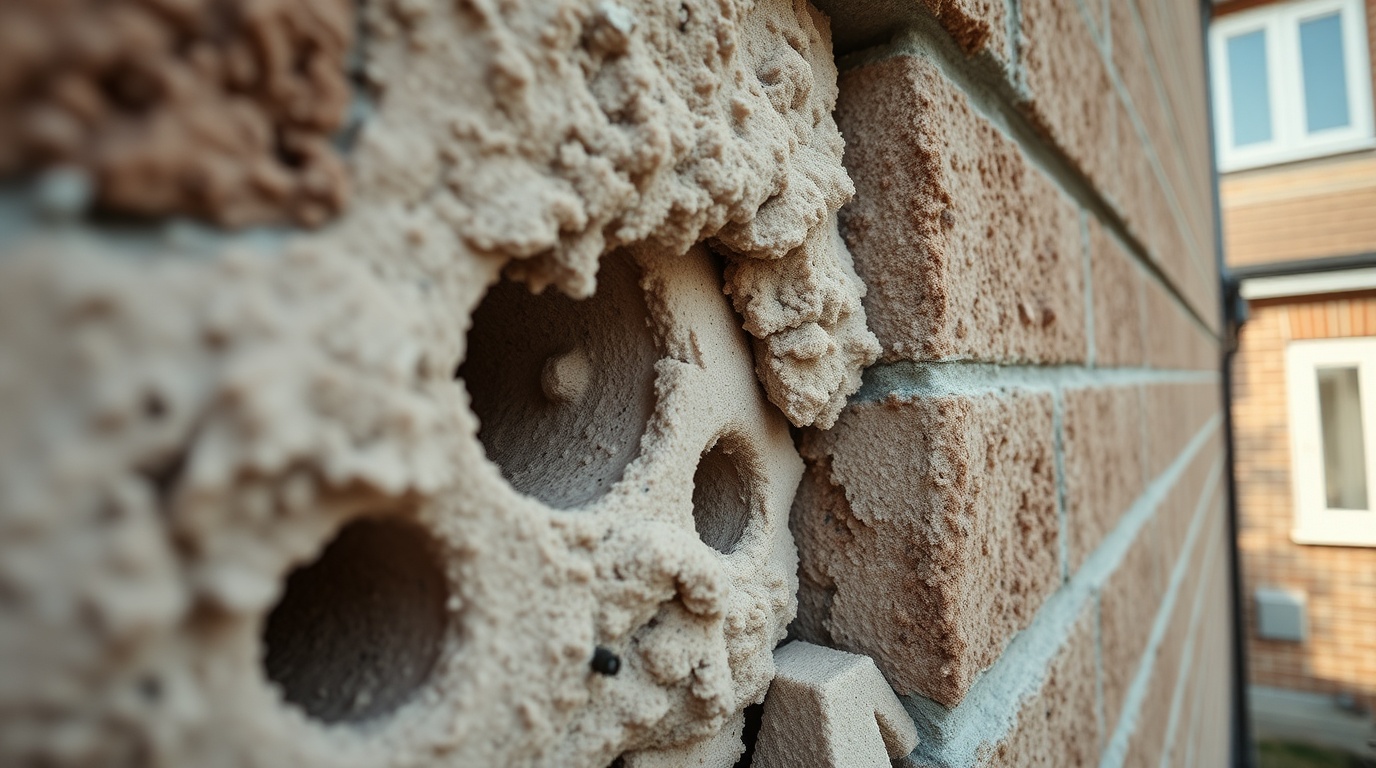
The short answer
Whether you need scaffolding depends entirely on how high the walls are and how safely they can be reached. A single-storey bungalow can often be drilled and vacuumed from the ground with hop-ups or short ladders, needing no scaffolding at all. A two- or three-storey house usually needs proper access to the upper walls, which means either a scaffold or a mobile access tower so operatives can drill the upper drilling pattern and feed the extraction equipment safely. Drilling has to follow a grid up the full height of the wall, so the upper rows simply cannot be reached from the ground on a tall house. Scaffolding adds cost and time because it has to be erected before and struck after the work, which is why access is one of the biggest variables in an extraction quote.
Access is often the single biggest swing factor in both the price and the duration of a cavity extraction, and it comes down to height. The extraction method is the same at every level — the question is how you reach it safely.
Scaffolding for extraction
- BungalowOften no scaffold needed
- Two/three storeysScaffold or tower usually needed
- WhyDrilling grid runs full wall height
- Cost effectScaffold adds notable cost
- Time effectErect and strike add days
Why height decides the access method
Extraction requires drilling a pattern of holes from the base of the wall to just below the eaves, because the fill occupies the full height of the cavity and slumped material collects at the bottom. The upper rows of that pattern are out of reach from the ground on anything taller than a single storey.
So the access method is driven by where those upper holes are:
- Single storey (bungalow): the whole wall can usually be reached from the ground with hop-ups or short ladders.
- Two storeys: the upper-floor walls need a tower or scaffold to drill and vacuum safely.
- Three storeys, gables and tall townhouses: almost always need a full scaffold to reach the apex and upper panels.
Working at height with drilling equipment and heavy vacuum hoses is not something to do off a leaning ladder, which is why proper access is a safety requirement, not a luxury.
Scaffold versus tower versus ladder
There is a hierarchy of access options, each suited to different heights and layouts:
| Access method | Suited to | Cost/time impact |
|---|---|---|
| Hop-ups / short ladders | Single-storey, low walls | Minimal |
| Mobile access tower | Two storeys, open ground | Moderate |
| Full scaffold | Tall/gable walls, awkward access | Highest |
| Cherry picker (rare) | Restricted sites | Variable hire cost |
Typical access options for cavity extraction. The method is chosen for height and ground conditions, and it shapes the quote.
How access affects cost and timing
Beyond the extraction itself, access adds both money and days to a job:
- Scaffold hire and erection is a cost on top of the extraction labour, and it scales with the height and length of wall to be covered.
- Erect-and-strike time means the scaffold goes up before work starts and comes down after — often adding a day or more either side of the actual extraction.
- Ground conditions matter too: sloping gardens, conservatories, alleyways and overhanging trees can rule out a tower and force a tailored scaffold, raising the cost.
For a single-storey property with clear ground, none of this applies and the job stays quick and comparatively cheap. The taller and more awkward the property, the more access dominates the overall price.
Frequently asked questions
Can cavity insulation be removed without scaffolding?
Yes, on low buildings. A single-storey bungalow can usually be drilled and vacuumed from the ground with hop-ups or short ladders. Taller houses need a tower or scaffold to reach the upper walls safely, because the drilling pattern runs the full height of the cavity.
Does a bungalow need scaffolding for extraction?
Usually not. The walls of a single-storey property can normally be reached from ground level, so no scaffold is needed. This is one reason bungalow extractions tend to be quicker and cheaper than equivalent work on a two-storey house.
How much does scaffolding add to the job?
It adds both cost and time. Scaffold hire and erection is charged on top of the extraction labour and scales with the height and length of wall, while the erect-and-strike can add a day or more either side of the work. Always confirm whether a quote includes scaffolding.
Sources & further reading
- HSE — working at height regulations and safe access
- Checkatrade — cavity wall insulation removal cost guide
- CIGA — Cavity Insulation Guarantee Agency
Figures on this page are typical UK ranges drawn from published sources and depend on your specific property. They are guidance, not a quotation.