The short answer
A cavity wall insulation claim is built on two things: evidence that there is a defect, and evidence that the defect caused the damage. The strongest support comes from an independent surveyor's report diagnosing the type and source of any damp, a borescope inspection showing the condition of the fill inside the cavity, and damp-meter readings on the affected walls. Add dated photographs of staining, mould and external exposure, your guarantee and installation paperwork, and a record of when problems appeared. Crucially, the evidence should also help rule out unrelated causes such as leaking gutters, roof defects or rising damp, since a guarantee claim only succeeds where the insulation itself is responsible.
Good evidence is what turns a complaint into a claim. The sections below set out what to gather and why each item carries weight.
Evidence checklist
- Survey reportdiagnoses cause
- Borescopeshows fill in cavity
- Damp readingsmeasure moisture
- Photosdated, internal + external
- Paperworkguarantee + install details
The core technical evidence
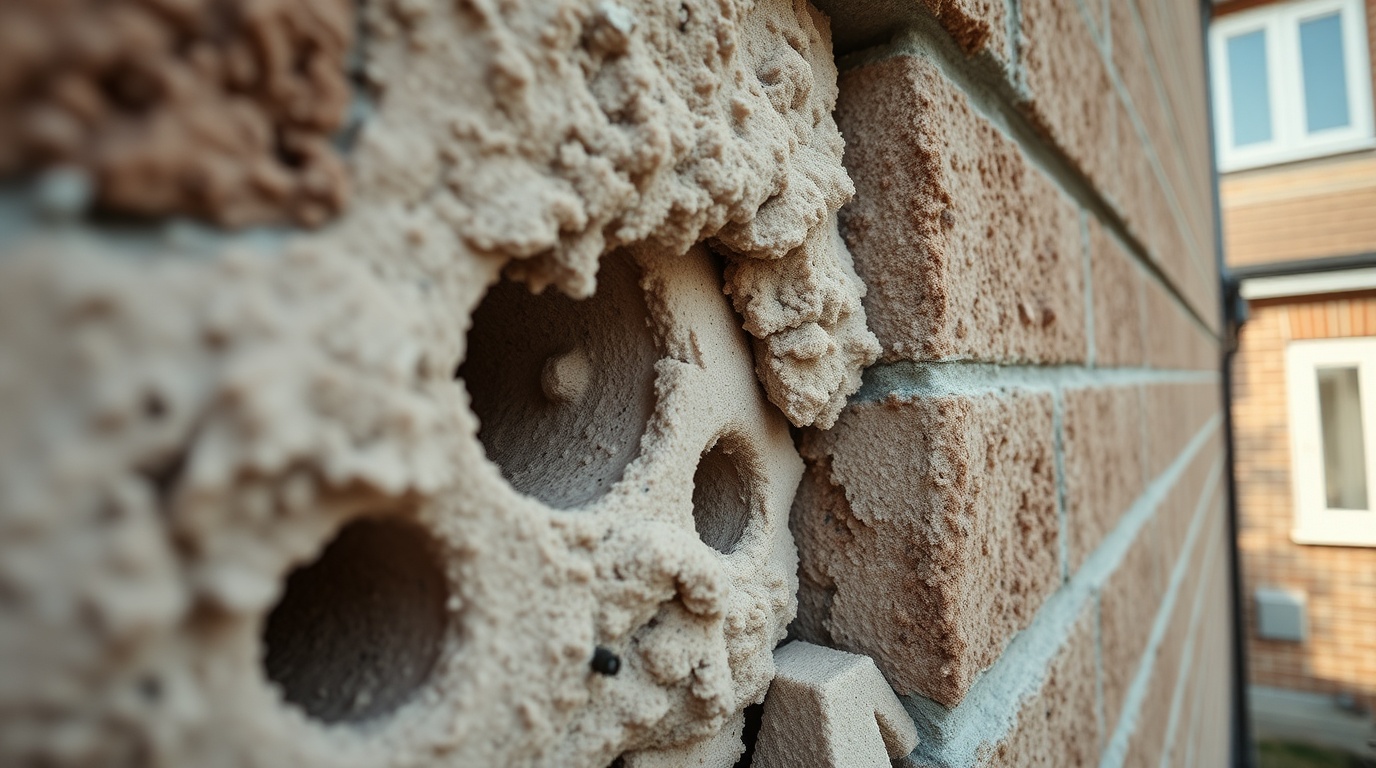
The heart of a claim is a clear, independent assessment of the wall. An independent survey from a damp or building surveyor diagnoses whether the damp is penetrating (from outside), rising (from the ground) or condensation, and identifies the likely source. A borescope inspection — small holes drilled into the mortar so a camera can view the cavity — shows whether the fill is bridging the cavity, has slumped, or is otherwise defective. Damp-meter readings record moisture levels on the inner walls and map where the problem is worst. Together these connect the visible symptoms to a specific fault in the insulation rather than to something else.
What makes this combination persuasive is that each piece addresses a different question. The damp diagnosis says what kind of moisture problem exists; the borescope shows the physical condition of the fill that might be causing it; the readings quantify how bad it is and where. A claim resting on only one of these is weaker — readings alone do not prove the insulation is responsible, and a borescope image of imperfect fill means little without a moisture problem to explain. Assembled together, they build a clear chain from the symptom on the inside wall to a defect in the cavity.
Supporting documentation
Alongside the technical findings, paperwork strengthens the claim:
- Guarantee details — your CIGA guarantee number, or confirmation from CIGA that one exists for the property.
- Installation records — who installed the fill, when, and any survey done before installation.
- Dated photographs — of damp patches, mould, staining and the external walls, ideally over time so progression is visible.
- A timeline — when symptoms first appeared and how they have developed.
- Finance documents — if the work was bought on credit, the agreement matters for a Consumer Credit Act route.
| Evidence | Supports | Source |
|---|---|---|
| Survey report | cause of damp | independent surveyor |
| Borescope | defect in fill | surveyor / CIGA |
| Damp readings | extent of moisture | surveyor |
| Guarantee number | cover exists | paperwork / CIGA |
| Photographs | visible damage | homeowner |
Indicative evidence list for guidance. Sources: CIGA; PCA.
Ruling out other causes
A guarantee or insulation claim only works where the insulation is the cause, so part of the evidence is showing it is not something else. A good survey checks the obvious alternatives: blocked or leaking gutters and downpipes, defective pointing or render, roof leaks, a failed damp-proof course allowing rising damp, and condensation from heating and ventilation. If one of these is the real source, an insulation claim will not succeed for that damage. Documenting that these have been considered and excluded — or quantifying how much damage each contributes — makes the claim far harder to dismiss and reflects how CIGA's own inspections approach the question.
How much evidence is enough
The amount depends on the route. For a straightforward CIGA guarantee claim, raising the complaint and letting CIGA inspect may be enough, since they gather much of the technical evidence themselves. For a disputed claim, or one pursued against an installer or finance provider, you generally need stronger, independent proof — a full survey, borescope findings and a clear causation argument. If a claim is refused, additional independent evidence is often what reopens it. As a rule, the more contested the cause, the more important it is to have documented, dated, independent material linking the damage to a defect in the fill.
It is worth keeping the effort proportionate to the situation. There is little point commissioning an expensive full survey before you have even asked CIGA whether a guarantee exists and whether they will inspect — for many homeowners that first step resolves matters at no cost. Independent evidence comes into its own when the cause is genuinely in dispute, when a claim has been turned down, or when you are pursuing a party who will not simply put the work right. Gathering and dating your own photographs and notes from the outset, though, costs nothing and is always useful whichever route the claim ends up taking.
Quality of evidence usually matters more than quantity. A single clear, independent survey that diagnoses the damp, examines the fill and rules out other sources is worth far more than a thick file of photographs with no analysis of cause. The aim is to answer the one question every assessor and decision-maker will ask: what is making this wall damp, and is it the insulation? Evidence that speaks directly to that question — and from a source with no interest in the outcome — is what gives a claim its weight, whether it is being considered by CIGA, a finance provider, the Ombudsman or a court.
Frequently asked questions
Do I need to pay for a survey before claiming?
Not always. For a CIGA guarantee claim, CIGA arranges its own inspection. An independent survey is most useful where the cause is disputed, the claim is refused, or you are pursuing an installer or finance provider and need your own proof of cause.
What is a borescope inspection?
It involves drilling small holes into the mortar so a camera can view the inside of the cavity. It shows whether the fill is bridging the cavity, has slumped or is otherwise defective, which is key evidence linking damp to the insulation.
Will photographs alone be enough?
Rarely on their own. Photographs show the visible damage but not its cause. They work well alongside a survey, damp readings and a borescope inspection that together establish the insulation is responsible rather than an unrelated source.
Sources & further reading
Figures on this page are typical UK ranges drawn from published sources and depend on your specific property. They are guidance, not a quotation.