The short answer
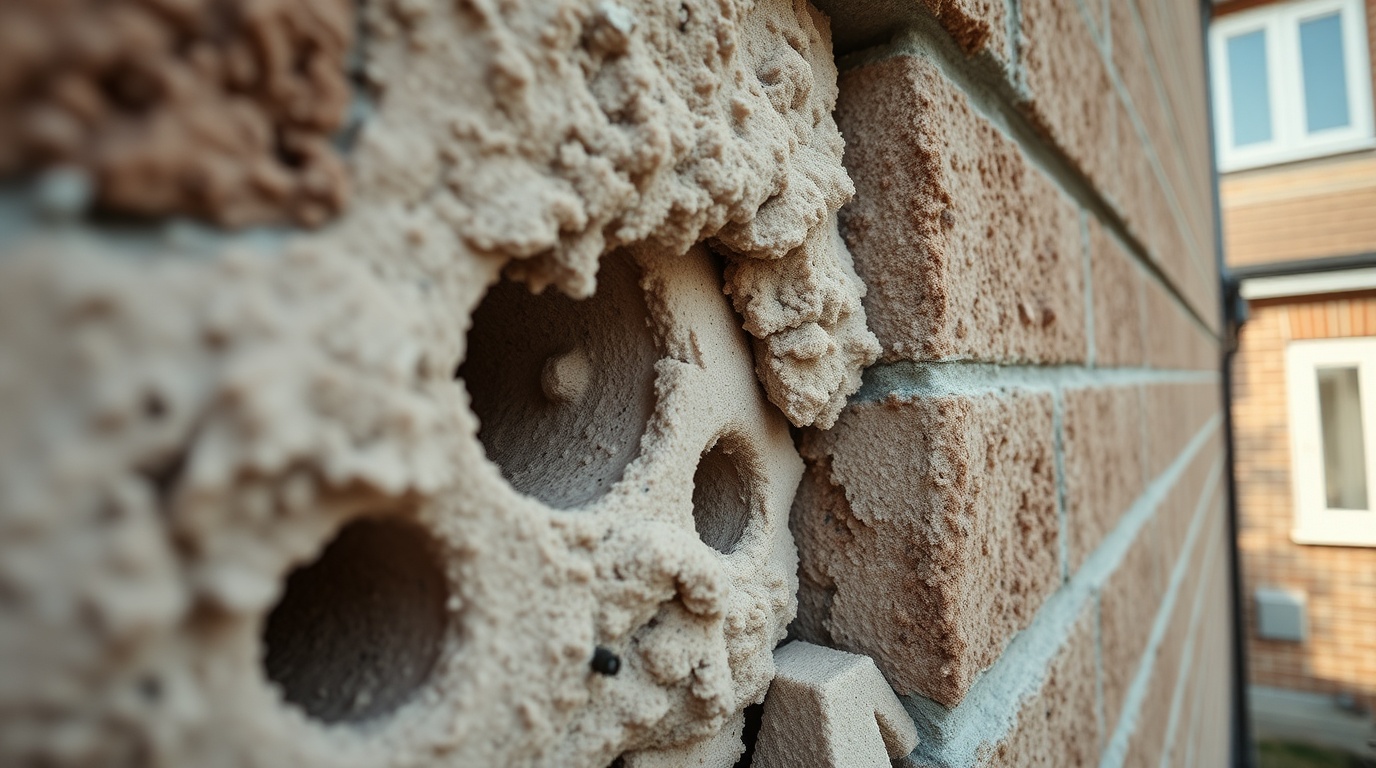
Cavity insulation may need removing when it has failed in a way that causes damp or fails to insulate. The classic warning signs are damp patches and mould on internal walls, cold spots, tide marks and condensation that started after the cavity was filled — often worse on the wall that faces the prevailing wind and rain. These point to fill that has slumped (collapsed down the cavity leaving cold gaps), soaked up water, or bridged the gap so moisture crosses from the wet outer leaf to the dry inner leaf. The only reliable way to confirm it is a borescope survey, which looks inside the cavity to see the fill's condition. Properties in areas of severe wind-driven rain were never well suited to cavity fill in the first place, which is a common reason for removal. Working, dry fill with no symptoms does not need removing.
Symptoms on the inside of the house are the first clue, but they can have several causes. Distinguishing failed cavity fill from a roof leak or simple condensation is what turns a worry into a clear decision.
Signs fill has failed
- Damp patches/mouldEspecially on weather-facing walls
- Cold spotsSuggests slumped or gapped fill
- Symptom timingOften appeared after cavity was filled
- Confirm withBorescope survey of the cavity
- High-risk homesSevere wind-driven-rain exposure
The warning signs inside the house
Failed cavity fill usually announces itself on the internal face of external walls. Watch for:
- Damp patches and tide marks on external walls, particularly the wall facing the prevailing wind and rain.
- Black mould in corners and on cold parts of external walls.
- Cold spots you can feel by hand, suggesting the fill has slumped and left an uninsulated gap behind that area.
- Condensation on the inside of external walls that was not there before the cavity was filled.
- Peeling paint, blistering plaster or musty smells on affected walls.
Timing is a strong clue: if these problems appeared after the cavity was insulated, the fill is a prime suspect. If the wall was always like that, the cause may lie elsewhere.
Ruling out other causes first
Damp has several possible sources, and only some are fixed by removing cavity fill. Before assuming the insulation is at fault, separate the causes:
| Symptom pattern | Likely cause | Does removal help? |
|---|---|---|
| Damp on weather-facing wall, worse after rain | Bridged/saturated cavity fill | Yes |
| Localised patch under a slipped tile | Roof leak | No — fix the roof |
| Damp near pipes/tanks | Plumbing leak | No — fix the plumbing |
| Generalised winter condensation | Ventilation/heating | Usually no |
| Rising tide mark at skirting level | Rising damp / failed DPC | No — DPC issue |
Matching damp symptoms to causes. Only failed cavity fill is resolved by extraction; other causes need their own fix.
Confirming with a borescope survey and exposure check
The decisive evidence comes from looking inside the cavity. A specialist drills a small inspection hole and inserts a borescope to see the fill directly. They are checking for:
- Slumping — has the fill collapsed down the cavity, leaving an uninsulated gap at the top of the wall?
- Saturation — is the fill wet, indicating it is absorbing and holding water?
- Bridging — is the fill, debris or mortar carrying moisture across the cavity to the inner leaf?
- Voids and gaps from a poor original installation.
Alongside the survey, the property's exposure to wind-driven rain matters. Homes in severely exposed zones (much of western, south-western and coastal Britain, and exposed hilltops) were often unsuitable for cavity fill from the start, mapped on the BRE driving-rain exposure data. A failed fill on an exposed wall is a strong case for removal. If the borescope shows the fill is dry, intact and gap-free, and there are no symptoms, then it is working as intended and does not need removing.
Frequently asked questions
What are the signs that cavity insulation has failed?
Damp patches, mould, cold spots, tide marks and condensation on external walls, especially on the side facing the prevailing wind and rain, and often appearing after the cavity was filled. These suggest the fill has slumped, soaked up water or bridged the cavity.
Can I check the cavity myself?
Not reliably. The clues inside the house point to a problem, but confirming it needs a borescope survey — a small inspection hole and a camera that shows the fill's condition directly. That is what distinguishes slumped or saturated fill from a roof or plumbing leak.
Does living in an exposed area mean my insulation will fail?
Not always, but homes in zones of severe wind-driven rain (much of western and coastal Britain) were often unsuitable for cavity fill, and failure is more common there. The BRE driving-rain exposure maps inform whether a wall should have been filled at all.
Sources & further reading
- CIGA — Cavity Insulation Guarantee Agency
- Property Care Association — damp diagnosis and cavity wall insulation
- Energy Saving Trust — cavity wall insulation
Figures on this page are typical UK ranges drawn from published sources and depend on your specific property. They are guidance, not a quotation.