The short answer
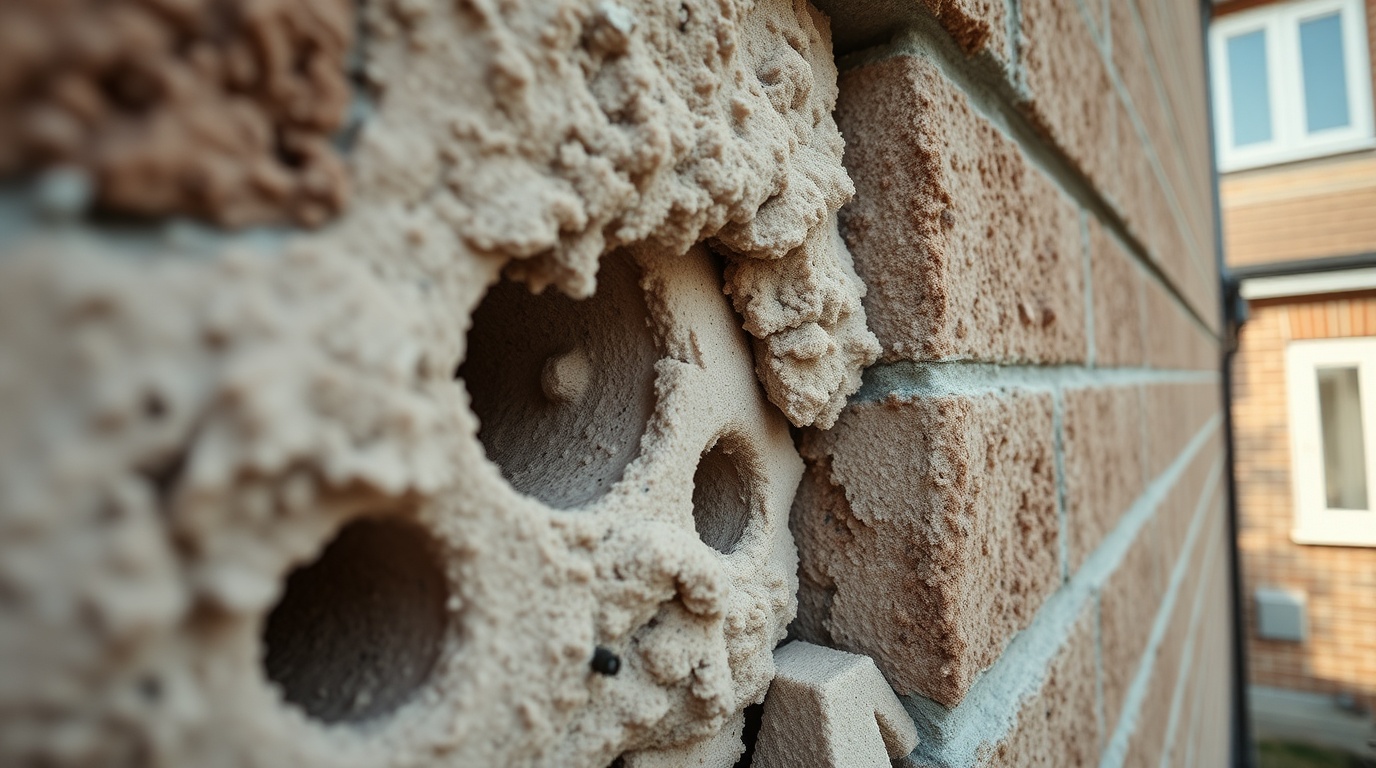
Cavity extraction is a dusty job, but most of the mess stays outside because the work is done through the external walls — your internal rooms, plaster and decoration are not touched. The main sources of mess are brick dust from drilling, fine fibre or bead dust from extraction, and stray material around the access holes. With blown mineral fibre the nuisance is airborne dust; with EPS bead it is loose beads that are light and prone to blowing around. A careful contractor sheets the ground, contains spillage, uses sealed vacuum bagging and cleans down paths, sills and surrounding surfaces afterwards. The drill holes are repointed with matching mortar. Inside the house you may hear and feel the drilling, but you should not be left with internal debris if the job is done properly.
Mess is one of the most common worries before an extraction, and the honest answer is that there is some — but it is largely external and controllable. The difference between a tidy job and a messy one is mostly down to the contractor's care.
Extraction mess
- WhereMostly external, around drill holes
- Main dustBrick dust + fibre/bead dust
- Bead nuisanceLight EPS beads blow around
- Internal messMinimal — work is from outside
- Clean-upSheeting, sealed bagging, wash-down
Why most of the mess is outside
The whole extraction is carried out through holes drilled into the external mortar joints. The drilling, the vacuum hoses and the bagging of waste all happen on the outside of the building. That means the disruptive, dusty part is confined to the walls and the ground beneath them, not your living rooms.
Inside, the experience is mainly noise and vibration — drilling masonry is loud and you will feel it through the walls — but you should not end up with fibre or beads on your carpets. If a contractor needs internal access at all, it is usually only to check for the odd through-wall feature; the standard job is entirely external.
The two kinds of mess: dust and beads
The type of mess depends largely on what is in the cavity:
| Fill type | Main mess | Control measure |
|---|---|---|
| Blown mineral fibre | Airborne fibre dust + brick dust | Dust suppression, sealed bagging |
| EPS bead | Loose beads blowing around | Ground sheeting, containment |
| UF foam | Foam fragments + heavy brick dust | Bagging fragments, wash-down |
| All types | Brick dust from drilling | Sweeping and washing paths/sills |
Typical mess by fill type and how a careful contractor keeps it under control.
What a careful contractor does to limit it
The mess is largely a function of how methodical the team is. Good practice includes:
- Ground sheeting below the work area to catch dust, beads and debris.
- Sealed vacuum bagging so extracted material goes straight into bags rather than onto the ground.
- Dust suppression when drilling and extracting fibre, which generates the most airborne dust.
- Protecting sills, paths, drains and planting near the drill holes.
- Washing down afterwards — sweeping brick dust and rinsing paths and window sills.
- Repointing the holes neatly with colour-matched mortar so the finish is tidy.
It is reasonable to ask in advance how a contractor controls dust and stray material, and to expect the site left clean. The extraction is inherently a bit dusty, but it should not leave a lasting mess.
Frequently asked questions
Does cavity extraction make a mess inside the house?
Generally no. The work is done through the external walls, so the dust and debris stay outside. Inside you will mainly notice noise and vibration from drilling the masonry, not fibre or beads on your floors.
What is the messiest part of the job?
Drilling produces brick dust and extraction produces fine fibre or bead dust. With EPS bead the lingering nuisance is stray beads, which are light and blow around if not contained. Ground sheeting and sealed bagging keep both under control.
Will the drilled holes be visible afterwards?
Only slightly, if done well. Holes are drilled into the mortar joints rather than the brick faces and repointed with colour-matched mortar, so a careful repair blends into the surrounding pointing and is hard to spot.
Sources & further reading
- CIGA — Cavity Insulation Guarantee Agency
- Property Care Association — cavity wall insulation advice
- Energy Saving Trust — cavity wall insulation
Figures on this page are typical UK ranges drawn from published sources and depend on your specific property. They are guidance, not a quotation.