The short answer
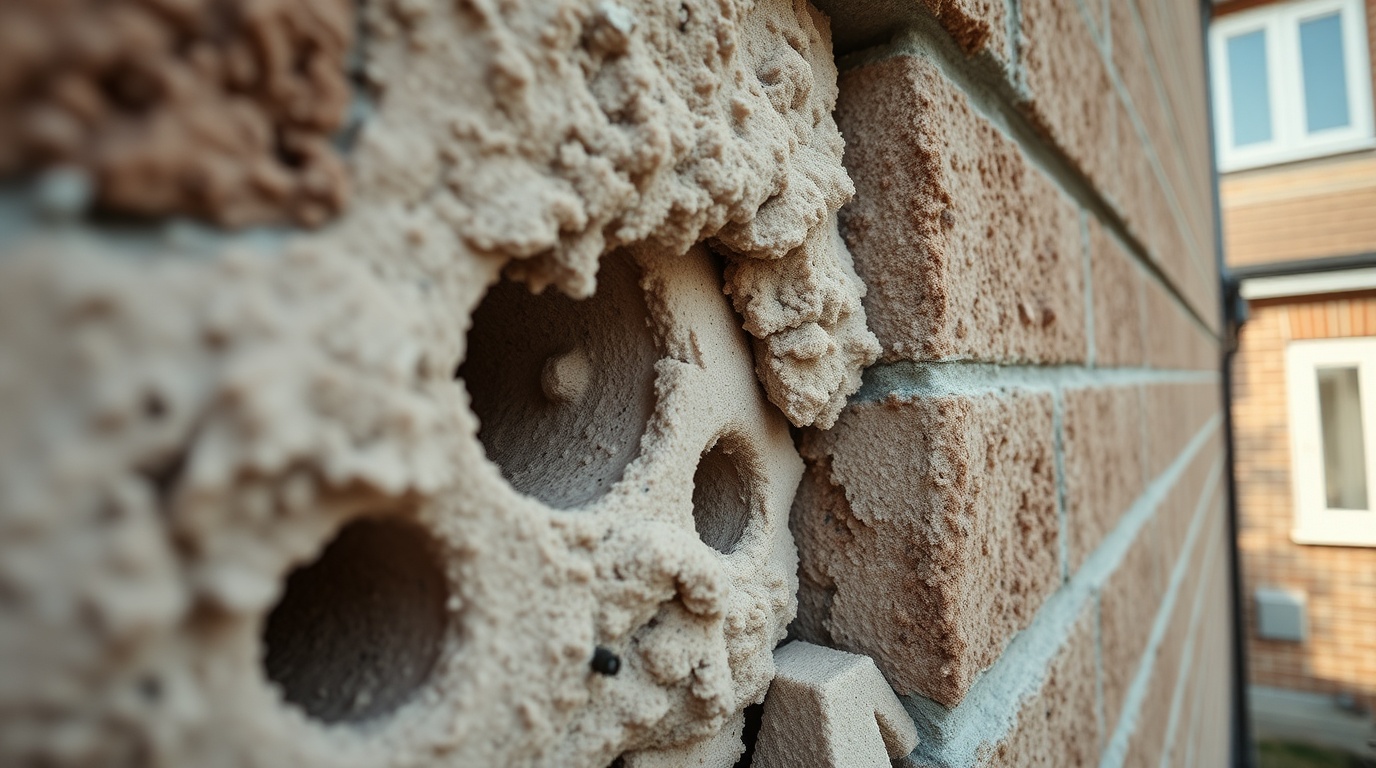
If the insulation is working properly and causing no damp, leaving it is clearly cheaper — there is no reason to spend money extracting good insulation. The calculation changes when the fill has failed. Leaving slumped, saturated or bridging insulation in place can cost more over time through ongoing damp, mould, ruined internal decoration, rotting timber and higher heating bills as the wet wall loses heat. In that situation the up-front cost of extraction often works out cheaper than the slow, recurring cost of living with the damage and repeatedly redecorating. So the honest answer is: leave sound insulation, remove failed insulation. The deciding factor is not the headline extraction price but whether the fill is causing harm — confirmed by a damp diagnosis and a borescope survey rather than guesswork.
"Remove or leave" is really two different questions depending on the state of the fill. For working insulation the answer is obvious; for failed insulation the cheaper option is often the one that looks more expensive up front.
Remove vs leave cost
- Sound insulationLeave it — removal wastes money
- Failed/damp fillRemoval often cheaper long-term
- Hidden costs of leavingDamp, mould, redecorating, heat loss
- Deciding factorIs the fill causing harm?
- Confirm withDamp diagnosis + borescope survey
When leaving it is the cheaper, sensible choice
Plenty of cavity insulation does exactly what it should — fills the gap evenly, stays dry and cuts heat loss with no side effects. For that insulation, removal is simply money spent to make the house colder. If there is no damp, no mould, no cold patches and no failed guarantee claim, the cheaper and correct option is to leave the insulation in place and keep its energy benefit.
This is the most common situation. Most cavity fills installed by registered installers perform well, and the existence of a problem somewhere else should not push a homeowner to extract sound insulation on a whim.
The hidden costs of leaving failed fill
Failed insulation is a different matter. When fill has slumped, soaked up water or bridged the cavity, leaving it in place is rarely the cheaper path once the knock-on costs are added up:
| Consequence of leaving failed fill | Recurring cost |
|---|---|
| Persistent damp on internal walls | Repeated redecoration, replastering |
| Mould growth | Cleaning, health impact, treatment |
| Heat loss through wet walls | Higher heating bills year on year |
| Damage to timber and fittings | Repairs to skirtings, joinery, plaster |
| Reduced saleability | Lower value or sale complications |
The recurring costs of living with failed cavity fill, which can outweigh a one-off extraction.
How to make the call honestly
The decision should rest on evidence, not on the headline price of extraction. A sensible process:
- Diagnose the damp. Confirm the cavity fill is actually the cause, rather than a roof leak, plumbing fault or condensation, which would not be fixed by extraction.
- Survey the cavity with a borescope to see whether the fill has slumped, is wet or is bridging the gap.
- Check for a CIGA guarantee — if the fill failed and is covered, removal may be funded, changing the cost comparison entirely.
- Compare the one-off extraction cost with the rolling cost of damp repairs, redecoration and higher bills if you do nothing.
Framed that way, the question is not simply "is removal cheap?" but "is leaving it cheaper, all things considered?" For sound insulation, leaving wins. For failed, damp-causing fill, removal usually does.
Frequently asked questions
Should I remove cavity insulation that isn't causing problems?
No. Sound insulation that keeps the cavity warm with no damp or cold patches should be left in place — removing it only raises heat loss and costs money for no benefit. Removal is for failed fill, not working fill.
Does leaving damp insulation cost more than removing it?
Often, yes. Slumped or saturated fill can drive ongoing damp, mould, redecoration and higher heating bills, and the wet material loses more heat than dry insulation. Those recurring costs can outweigh a one-off extraction over time.
How do I know if my insulation has failed?
Look for damp patches or mould on internal walls, cold spots, and condensation that appeared after the cavity was filled. A borescope survey confirms whether the fill has slumped, soaked up water or bridged the cavity — guesswork is not enough.
Sources & further reading
- CIGA — Cavity Insulation Guarantee Agency
- Property Care Association — damp and cavity wall insulation advice
- Energy Saving Trust — cavity wall insulation
Figures on this page are typical UK ranges drawn from published sources and depend on your specific property. They are guidance, not a quotation.