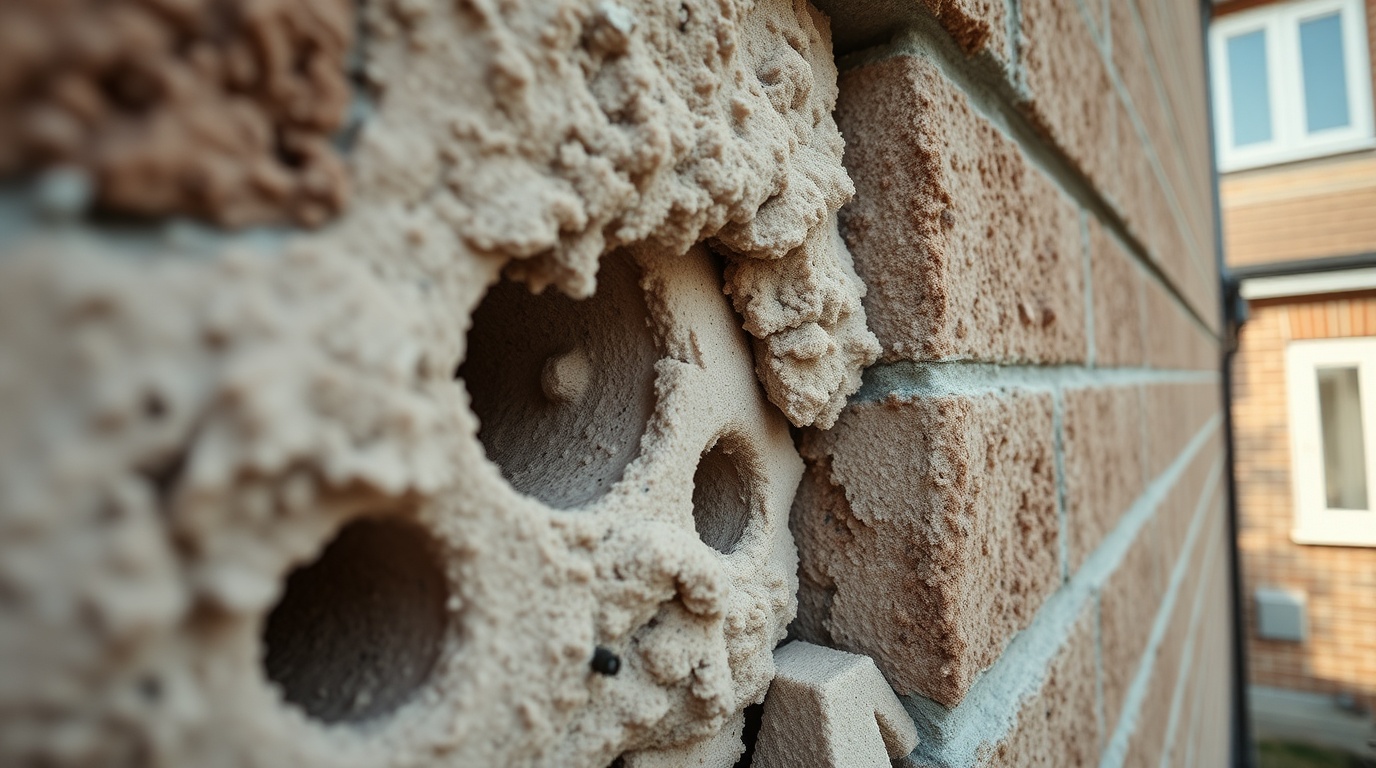
The short answer
A CIGA guarantee is a 25-year guarantee issued by the Cavity Insulation Guarantee Agency, an independent not-for-profit body set up by the cavity wall insulation industry. It covers professionally installed cavity wall insulation against defects in materials or workmanship that the registered installer is responsible for. Its key feature is independence: if the installer stops trading or goes bust, CIGA still stands behind the guarantee and arranges or funds the remedial work. The guarantee is linked to the property, so it passes to later owners, and it covers putting right defects — which can include removing failed fill and repairing related damage caused by the defect. It does not cover problems unrelated to the insulation, such as pre-existing damp or general wear.
CIGA is the safety net most UK cavity wall insulation is sold with. Knowing exactly what it does and does not cover is the starting point for any claim.
CIGA guarantee basics
- Issued byCavity Insulation Guarantee Agency
- Length25 years
- Coversdefects in materials / workmanship
- Survivesinstaller ceasing to trade
- Attached tothe property, not the buyer
What CIGA is and why it exists
CIGA was established by the cavity wall insulation industry as an independent, not-for-profit guarantee body. The problem it solves is simple: a guarantee from an individual installer is only as good as that installer's survival, and insulation is expected to last decades. By pooling registered installers under one scheme, CIGA provides a guarantee that outlives any single company. When you have insulation fitted by a CIGA-registered contractor, the installer registers the job and a guarantee is issued in your name and attached to the property's address. That registration is what you call on later if something goes wrong.
The model matters because cavity wall insulation is a long-lived measure, often fitted as part of an energy-efficiency drive, and the typical homeowner will move house several times before any latent defect shows itself. A guarantee tied to one contractor would frequently be worthless by the time it was needed. By contrast, a scheme funded collectively by registered installers can absorb the failure of any individual firm, which is precisely the situation in which a homeowner most needs protection. That independence is the single most important feature to understand about CIGA, and it shapes how every claim is handled.
What the guarantee covers
The CIGA guarantee covers the installation against defects for 25 years from the date of the work. In practice that means:
- Defective workmanship — for example fill that has slumped, gaps left in the cavity, or material bridging the cavity and letting damp across.
- Defective materials — insulation that fails to perform as it should because of a fault in the product.
- Remedial work — putting the defect right, which can include extracting the failed fill and making good.
- Related damage — damage to the property arising directly from the defect, within the terms of the guarantee.
| Feature | Detail |
|---|---|
| Duration | 25 years from installation |
| Workmanship | covered |
| Materials | covered |
| Installer insolvency | covered by CIGA |
| Transfers to new owner | yes, with the property |
Indicative summary for guidance. Source: CIGA guarantee terms.
What it does not cover
The guarantee is for defects in the insulation work, not every damp or cold problem a house can have. Common exclusions include damage from causes unrelated to the insulation — a leaking roof, faulty guttering, or rising damp that existed before the fill went in. It also will not cover problems caused by later alterations to the property, lack of normal maintenance, or condensation caused by the way the home is heated and ventilated. Because of this, a claim usually has to show that the insulation itself is the cause, which is why CIGA investigates and a survey often matters. Reading the specific terms issued with your guarantee is important, as wording has changed over the years.
The exclusions are not a loophole so much as a boundary on what the guarantee was ever meant to do. It backs the quality of the insulation work, not the general condition of the house. A wall that was already suffering from a failed damp-proof course, blocked gutters or a slipped roof tile has a problem that predates or sits outside the fill, and remedying the insulation would not cure it. Keeping that boundary in mind helps set realistic expectations: the guarantee is a strong protection against defective insulation, but it is not a maintenance contract for every source of moisture a building can develop.
How long it lasts and who it follows
The guarantee runs for 25 years from the installation date and is attached to the property, not to the person who originally paid for the work. That means if you buy a house with previously installed cavity wall insulation, any remaining CIGA cover normally transfers to you for the rest of the 25-year term. You do not have to be the original customer to make a claim. If you cannot find the paperwork, CIGA can check their records against your address. Once the 25 years expire the guarantee ends, though you may still have other rights against an installer or surveyor depending on the circumstances.
One practical consequence of the term running from installation is that the remaining cover on an older property can be much shorter than people assume. Insulation fitted twenty years ago may have only a few years of guarantee left, while recent work carries most of the term. When buying a home, it is worth treating the guarantee as part of your due diligence — confirming with CIGA that cover exists, noting the installation date, and understanding how long is left. After the term ends, the guarantee no longer applies, but a defect that arose during the period and was reported in time would still be considered on its own facts.
Frequently asked questions
Is a CIGA guarantee an insurance policy?
Not exactly. CIGA is an independent guarantee body funded by the industry rather than an insurer, but its function is similar — it stands behind the work for 25 years and steps in if the installer cannot. The protection is against defects in the installation.
Does CIGA cover damp that the insulation caused?
It can, where the damp is shown to result from a defect in the insulation, such as fill bridging the cavity. Damp from an unrelated source like a leaking roof or pre-existing rising damp falls outside the guarantee.
How do I find out if I have a CIGA guarantee?
Check your installation paperwork for a guarantee number, or contact CIGA directly with your property address. They keep records of registered installations and can confirm whether cover exists and how long is left to run.
Sources & further reading
Figures on this page are typical UK ranges drawn from published sources and depend on your specific property. They are guidance, not a quotation.