The short answer
A home can feel damper after cavity wall insulation for a few distinct reasons. The most common is raised indoor humidity: a better-sealed, warmer house holds more moisture from cooking, washing and breathing, and if ventilation was not improved to match, that moisture shows as condensation and a clammy feel. Less commonly the fill itself is at fault — bridging or saturated material carrying rain across the cavity as penetrating damp, or a void from slumping creating cold, condensing spots. Occasionally an existing problem such as rising damp or a leak was simply sealed in rather than fixed. The cure depends on which it is, so the damp should be diagnosed before blaming the insulation outright.
Feeling damp after insulation is a genuinely common complaint, and it usually has more to do with moisture balance and ventilation than the fill failing. The sections below separate the causes.
Why it feels damp
- Most commonhumidity up, ventilation unchanged
- Fill faultbridging or saturated material
- Slumpingcold spots that condense
- Sealed-inexisting damp not fixed first
- Cure depends oncorrect diagnosis
The ventilation and humidity shift
Insulating a cavity makes a home warmer and slightly more airtight, which is the point — but it changes the moisture balance. A household still produces the same litres of water vapour each day from cooking, showering, drying clothes and simply breathing. If the home was previously draughty, that moisture used to leak away; once the walls are warmer and gaps are fewer, more of it stays indoors. Without matching ventilation — trickle vents, extractor fans, occasional airing — relative humidity rises and the air feels clammy and damp, with condensation on windows and cooler surfaces. This is a moisture-management issue, not a failure of the insulation, and it is the single most common reason a home feels damp afterward. It can feel counter-intuitive, because the wall surfaces themselves are now warmer and drier — but the air in the rooms is carrying more moisture, and that moisture finds the remaining cool surfaces: window glass, the cold corner of a north wall, the back of a wardrobe. People often read this as the insulation having 'made the house damp', when in fact it has simply revealed a ventilation shortfall that the old draughts were quietly covering. The same amount of cooking and washing in a tighter, warmer house needs a little more deliberate airing to stay comfortable.
When the fill or an old problem is to blame
Sometimes the insulation, or what it covered up, is genuinely responsible:
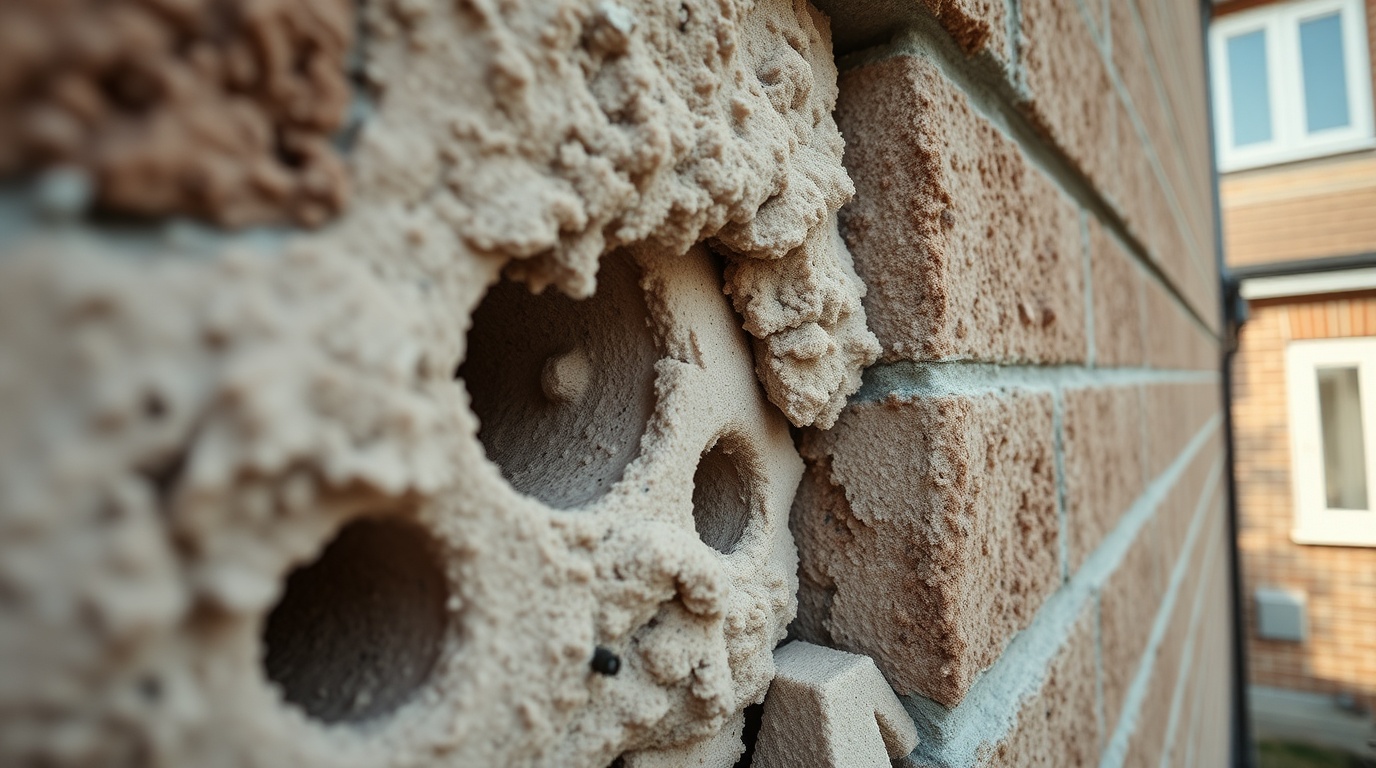
- Bridging or saturated fill carries rainwater across the cavity, producing real penetrating damp on weather-facing walls that worsens after wind-driven rain.
- Slumped fill leaves cold voids where condensation and mould form, making rooms feel cold and damp in patches.
- Sealed-in problems — pre-existing rising damp, a leaking gutter or porous render that should have been fixed first — continue unchecked behind the new fill.
These give more localised damp tied to specific walls, unlike the general clamminess of a humidity problem.
| Symptom | Likely cause | Direction of fix |
|---|---|---|
| General clamminess, window condensation | raised humidity | improve ventilation |
| Defined wet patch after rain | bridging fill | inspect / extract cavity |
| Cold mouldy patches | slumped fill | borescope, address voids |
| Low tide mark with salts | rising damp sealed in | treat the rising damp |
Indicative guidance. Source: Property Care Association / Energy Saving Trust.
How to find the real cause
The practical route is to separate humidity from a fill or structural fault. Start with the cheap checks: are extractor fans working and used, are trickle vents open, is washing dried indoors, and does opening up the home for a day reduce the clammy feel? A hygrometer showing persistently high indoor humidity points to ventilation. If specific walls stay damp regardless, a thermal imaging survey and borescope check whether the fill has slumped, saturated or bridged, and moisture-meter readings identify rising or penetrating damp. The timing and pattern are strong clues you can read yourself before any survey: a general clamminess that affects the whole home and fogs the windows points at humidity, while a defined damp patch confined to one exposed wall that darkens after wind-driven rain points at the cavity. Fixing the right cause — better ventilation, an external repair, or cavity extraction — is what actually clears the damp feel, and getting the diagnosis right first avoids the waste of extracting sound insulation when a few extractor fans and open vents would have done the job.
Restoring the moisture balance
Every home has a moisture budget — the water vapour produced indoors each day has to leave at roughly the same rate it is created, or humidity climbs. A typical household generates a surprising amount from cooking, kettles, showers, baths, drying clothes and simply breathing overnight. In a draughty house, much of that used to escape through gaps without anyone noticing. Once the walls are insulated and the home is warmer and a little tighter, the old escape routes shrink, and unless ventilation is deliberately maintained the moisture lingers and the air feels clammy. Restoring the balance is mostly about controlled ventilation rather than going back to draughts: extractor fans that actually run on in kitchens and bathrooms, open trickle vents in window frames, the occasional cross-draught by opening windows on opposite sides, and not drying washing on radiators in unventilated rooms. Steady background warmth also helps, because warm air holds more moisture before it condenses. Where these measures fix the clammy feel, the insulation was never at fault — the home simply needed its ventilation brought up to match its new airtightness. Where specific external walls stay damp despite good ventilation, that is the signal to look past humidity and have the cavity itself inspected for slumped, saturated or bridging fill.
Frequently asked questions
Does cavity insulation reduce ventilation?
It does not seal a home like draught-proofing, but it makes walls warmer and slightly reduces background air movement. Homes that were relying on draughts to clear moisture may need active ventilation — fans and vents — to keep humidity down afterward.
How long after fitting should damp appear before I worry?
A clammy feel from humidity can show within weeks if ventilation is poor, while penetrating damp from bridging fill usually appears in the first wet, windy season. Either way, persistent damp on specific walls warrants a survey.
Can improving ventilation alone fix a damp feeling?
Often yes, if the cause is raised indoor humidity rather than a fill fault. Extractor fans, open trickle vents and not drying washing indoors frequently resolve the clammy feel. Localised wet patches on external walls need the cavity checked too.
Sources & further reading
- Property Care Association — condensation and ventilation
- Energy Saving Trust — cavity wall insulation
Figures on this page are typical UK ranges drawn from published sources and depend on your specific property. They are guidance, not a quotation.