The short answer
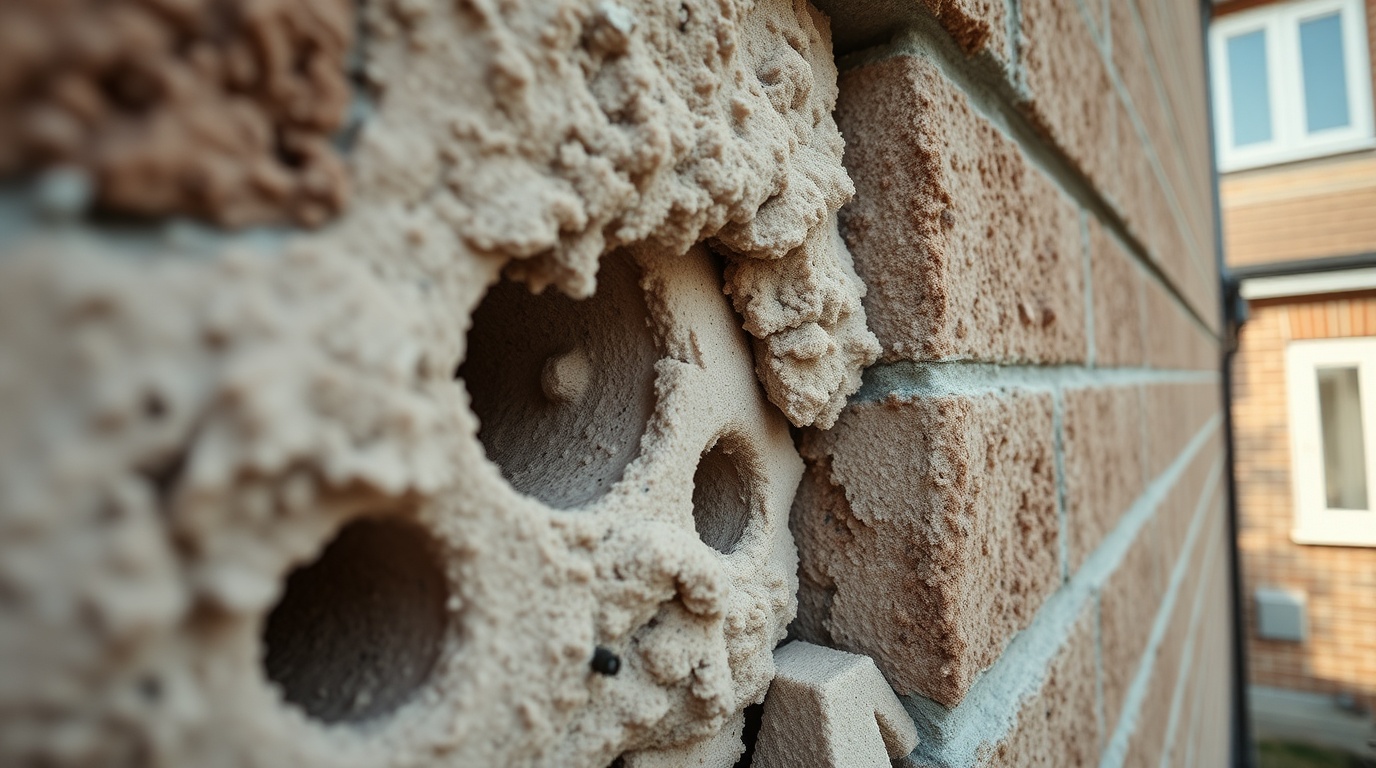
Walls go cold and wet together when cavity insulation has slumped or become saturated, because the same failure causes both problems. Where the fill has settled and left a void, that part of the wall loses its insulation, so the inner surface runs cold and warm household air condenses on it. Where the fill is wet, it conducts heat far better than dry insulation — making the wall colder still — and provides a moisture bridge that carries rainwater across the cavity to the inner leaf. The result is a wall that feels chilled to the touch and shows damp patches, condensation and mould in the same area, usually on weather-facing elevations after wind-driven rain.
A wall that is simultaneously cold and wet is a classic signature of failed fill, because lost insulation and moisture transfer are two faces of the same fault. Here is exactly how it happens.
Cold and wet causes
- Slumped fillvoid chills the inner wall
- Wet fillconducts heat, feels colder
- Moisture bridgerain crosses the cavity
- Visible resultcondensation, damp, mould
- Worst onweather-facing walls
Why the wall feels cold
Dry cavity insulation works by trapping still air in countless tiny pockets, and still air is one of the poorest conductors of heat there is — that is the whole point of insulating a cavity. It slows heat escaping through the wall, keeping the inner leaf, and the plaster you touch, relatively warm. When the fill slumps, it leaves an empty void at the top of the wall or in scattered patches, so heat pours out through that gap and the inner surface drops several degrees against the still-insulated areas around it. Wet fill is worse again: water conducts heat roughly twenty-five times better than the trapped air it has displaced, so saturated insulation stops insulating and instead actively draws warmth out of the wall, behaving more like a cold, conductive poultice than a barrier. Either way you get a measurable cold spot — a localised drop in inner-surface temperature — which is exactly what a surveyor's thermal camera reveals as a dark, cool zone against the warmer surrounding wall. The pattern of those cold zones often traces the path of the slump: a cool band across the top of a wall where fill has settled away from the wall plates, or vertical streaks following where water has tracked down through the material.
Why the same wall is wet
The wetness comes from two linked mechanisms. First, a cold surface invites condensation: warm, moist air from cooking, washing, drying laundry and simply breathing holds a lot of water vapour, and when it meets the chilled plaster over a cold spot it cools below its dew point and releases that moisture as a film of droplets. Plaster that stays above about 80% surface humidity for long enough then grows mould, which is why the worst patches sit precisely where the wall is coldest — behind furniture, in corners and along the failed-fill zone. Second, where the fill is genuinely bridging the cavity, rainwater that soaks the outer brick is carried horizontally through the saturated material to the inner leaf, defeating the air gap that should have stopped it — this is true penetrating damp, and unlike condensation it appears as a defined wet patch that worsens for a day or two after wind-driven rain and then slowly dries. The two mechanisms reinforce each other in a vicious loop: the colder the surface, the more readily air condenses on it; the wetter the fill, the colder and more conductive it becomes, which chills the surface further and invites still more condensation. A wall caught in this loop can feel damp in all weather — penetrating damp topping it up when it rains, condensation keeping it wet in between.
| Mechanism | Effect on wall | Visible sign |
|---|---|---|
| Void from slumping | loses insulation | cold patch, surface condensation |
| Saturated fill | conducts heat away | persistent cold and damp |
| Moisture bridging | rain crosses cavity | defined wet patch after rain |
| Cold-surface condensation | moisture deposits | black mould, musty smell |
Indicative guidance for UK cavity walls. Source: Property Care Association.
How a survey confirms it
Because cold-and-wet walls can also be caused by leaks or pure condensation, the cause should be confirmed, not assumed. A surveyor will combine thermal imaging — which reveals the cold zones where fill has slumped or saturated — with a borescope inspection, drilling a small hole to view the fill directly and check for voids, clumping, settlement or standing water. Moisture meter readings taken at several heights across the wall help separate shallow surface condensation from deeper penetrating damp, and a hygrometer reading of the room shows whether high indoor humidity is part of the picture. The timing of the problem matters too: damp that began within a year or two of the fill being installed, on the most exposed wall, points firmly at the cavity, whereas damp that predates it or appears on sheltered internal walls usually has another cause. Only once the cavity has actually been inspected — not guessed at from the symptoms — can you say whether the fill is the cause and whether it needs extracting so the wall can warm and dry.
Why heating the room does not cure it
A common instinct is to turn the heating up, and for a while the cold, damp wall seems better. The reason it returns is that the underlying cold bridge has not changed. Extra heat raises the air temperature in the room, which lifts the surface temperature of the cold patch a little and pushes it briefly above the dew point — so the visible condensation eases. But the failed fill is still missing or wet, so that part of the wall keeps losing heat far faster than the rest, and as soon as the heating drops or the air becomes more humid again the surface falls back below dew point and the moisture returns. Worse, the band of wall over the failed zone is now working hardest to shed heat, so you pay more to heat the room while the cold spot persists. The same logic applies to dehumidifiers: they reduce the moisture available to condense, which helps, but they do not restore the insulation or stop rain bridging a saturated fill. Lasting improvement comes from addressing the cavity — confirming by borescope and thermal imaging whether the fill has slumped, saturated or bridged, and extracting it where it has failed so the wall can be warm and dry again, not just temporarily masked.
Frequently asked questions
Why is only part of my wall cold and wet?
Slumped fill rarely settles evenly, so insulation can be missing in patches while intact elsewhere. The cold, wet zones map onto the voids and saturated areas, which is why the problem often looks localised.
Will turning the heating up fix it?
Not really. More heat masks a cold spot temporarily but does not restore the missing insulation or stop rain bridging the cavity, and it raises bills. The underlying fill problem needs diagnosing and, usually, extracting.
Could it be condensation rather than the insulation?
It can be either, or both. Pure condensation is driven by indoor humidity and poor ventilation, while failed fill adds a genuine cold spot and sometimes penetrating damp. A survey distinguishes them using thermal imaging and a borescope.
Sources & further reading
Figures on this page are typical UK ranges drawn from published sources and depend on your specific property. They are guidance, not a quotation.