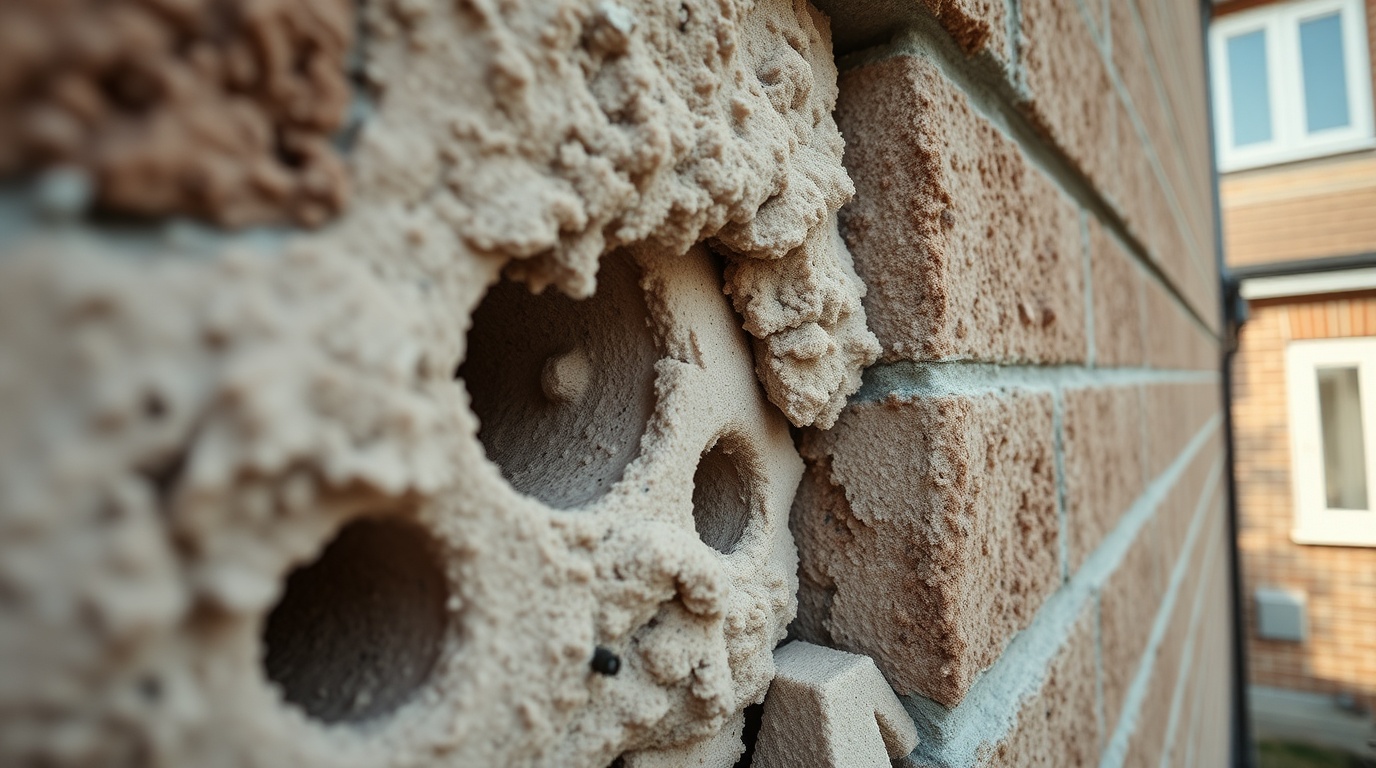
Failed cavity wall insulation, explained without the sales pitch
UK cavity wall insulation guidance

Failed cavity wall insulation, explained without the sales pitch

What removing failed or damp cavity wall insulation typically costs, how to spot insulation that has gone wrong, whether it really causes damp, how the extraction process works, and the CIGA guarantee and claims routes. Every figure is a range, with its source.

£900–£3,500+ typical extraction~£21.50/m² common per-square-metre figure25-year CIGA guarantee may apply
Sourced UK guidanceCheckatrade, MyJobQuote, CIGA, PCARanges, not promisescosts depend on your propertyAccredited specialistsCIGA-registered or PCA-accredited

In 40 seconds

Removing failed cavity wall insulation in the UK typically costs roughly £900 for a mid-terrace up to £3,500+ for a large detached home, with a common per-square-metre figure of around £21.50/m² and a pre-extraction survey usually adding about £150–£400. Most whole-house extractions take one to three days. Insulation is removed by drilling the mortar joints and using specialist vacuum or compressed-air equipment to clear the cavity, with borescope checks to confirm it is empty. Where retrofit insulation was installed wrongly or in an unsuitable property, it can bridge the cavity and let water cross to the inner wall, which is why damp and mould are the most common reasons people have it removed. If your insulation was fitted under a CIGA 25-year guarantee, that may cover extraction and remedial work — though not every claim is accepted. The honest answer is always a range, because it depends on your property and the insulation used.

Much of the advice online comes from firms that install or remove insulation, so the numbers can be optimistic and the guarantee routes glossed over. The pages below give honest extraction cost ranges, explain how to spot failed insulation and whether it causes damp, set out how the removal process works, and signpost the CIGA guarantee and claims routes factually — before you take a single quote.

~£900
typical mid-terrace
~£3,500+
large detached
~£21.50/m²
common rate
1–3 days
typical whole house

Cost & pricing

What removing failed cavity wall insulation actually costs in the UK.

Cost

How much does cavity wall insulation removal cost in the UK?

Typical extraction prices by property type and per square metre, why detached homes cost more, and how surveys, scaffolding and the insulation type move the figure.

Read the guide →
Per m² pricing

How much does cavity wall insulation extraction cost per square metre?

Why extraction is priced per square metre of wall, what a typical UK per-m² range covers, and how to estimate your own wall area for a rough figure.

Read the guide →
Grants & guarantees

Is cavity wall insulation removal covered by a grant or free?

Whether grants cover extraction, the role of the CIGA guarantee in funding remedial work, and why removal is rarely free unless a defect claim applies.

Read the guide →
Remove and refill

How much does it cost to remove and refill cavity wall insulation?

What a combined remove-and-refill job typically costs in the UK, how it splits between extraction and new fill, and when refilling is worth doing.

Read the guide →
Remove vs leave

Is it cheaper to remove cavity insulation or leave it?

When leaving failed cavity insulation costs more than removing it, the hidden costs of damp, and how to weigh extraction against doing nothing.

Read the guide →
Reinsulate decision

Should I reinsulate the cavity after removal?

When reinsulating a cleared cavity is worth the cost, when to leave it empty, and the alternatives that add warmth without filling the gap.

Read the guide →

Identification & symptoms

How to tell if your cavity wall insulation has failed.

Signs of failure

What are the signs of failed cavity wall insulation?

The damp patches, cold spots, mould and condensation that point to insulation that has slumped, bridged or absorbed water — and when to get the cavity surveyed.

Read the guide →
Staining and tide marks

Does failed cavity insulation cause staining or tide marks on walls?

How failed cavity fill produces staining, salt blooms and tide marks on internal and external walls, and how to read them.

Read the guide →
Slumped fill

How do I know if my cavity wall insulation has slumped?

How to tell if cavity wall insulation has slumped, from cold high-level walls and thermal imaging to borescope inspection.

Read the guide →
Survey methods

How do surveyors test if cavity wall insulation has failed?

The methods surveyors use to test failed cavity wall insulation, from borescope inspection and thermal imaging to moisture mapping.

Read the guide →
Black mould

Is black mould a sign of failed cavity insulation?

When black mould points to failed cavity insulation versus ordinary condensation, and the patterns that distinguish them.

Read the guide →
Unsuitable houses

Should cavity insulation never have been installed in my type of house?

Which house types and walls are unsuitable for cavity wall insulation, from severe exposure to narrow, rubble-filled or non-cavity walls.

Read the guide →
Health effects

What are the health effects of damp from failed cavity insulation?

The health effects of damp and mould from failed cavity insulation, who is most vulnerable, and what UK guidance says about indoor mould.

Read the guide →
Inside the cavity

What does failed cavity wall insulation look like inside the cavity?

What a borescope reveals inside a failed cavity, from voids and slumping to clumped, wet or mortar-bridged fill.

Read the guide →

Damp & moisture

Whether cavity wall insulation can actually cause damp.

Damp link

Can cavity wall insulation cause damp?

When and why retrofitted insulation bridges the cavity and lets water cross to the inner wall, which properties are most at risk, and what to do about it.

Read the guide →
DPC bridging

Can cavity wall insulation bridge the damp proof course?

How cavity wall insulation can bridge the damp proof course, allowing ground moisture past the DPC, and how this differs from true rising damp.

Read the guide →
Coastal exposure

Can cavity wall insulation cause damp in a coastal or exposed house?

Why coastal and exposed homes in severe BRE exposure zones face higher damp risk from cavity wall insulation, and what suitability checks matter.

Read the guide →
Mould

Can cavity wall insulation cause mould on internal walls?

How failed cavity insulation triggers black mould on internal walls through cold surfaces and condensation, and how to tell it apart from lifestyle condensation.

Read the guide →
Penetrating damp

Can wrongly installed cavity insulation cause penetrating damp?

How poor cavity insulation installation causes penetrating damp through bridging, voids and unsuitable walls, and how it differs from rising damp.

Read the guide →
Cold spots

Does failed cavity insulation cause cold spots and condensation?

How failed cavity fill produces cold spots and surface condensation through voids and cold bridging, and how thermal imaging finds them.

Read the guide →
Damp after fitting

Why does my house feel damp after cavity wall insulation?

Why a home can feel damp after cavity wall insulation, from reduced background ventilation to bridging fill and pre-existing problems sealed in.

Read the guide →
Cold and wet walls

Why is my cavity wall insulation making walls cold and wet?

Why failed cavity fill leaves internal walls both cold and wet at the same time, through lost insulation and moisture bridging.

Read the guide →

Process & method

How specialists actually clear a failed cavity.

The process

How is cavity wall insulation removed?

The step-by-step extraction method — survey, drilling the mortar joints, vacuum or air clearance, borescope verification and making good — and how long it takes.

Read the guide →
Permissions

Does cavity wall insulation removal need planning permission or building control?

Whether extraction needs planning permission or building control sign-off, and where consent does come into play around refilling and listed buildings.

Read the guide →
Scaffolding & access

Do you need scaffolding to remove cavity wall insulation?

When scaffolding is needed for cavity extraction, when towers or ladders suffice, and how access affects the cost and timeline.

Read the guide →
Mineral fibre

What method is used to extract blown mineral fibre insulation?

How blown mineral fibre is extracted from a cavity, why slumped and damp fibre is harder to remove, and the agitation and suction techniques used.

Read the guide →
Diagnosis & signs

How do I know if my cavity insulation needs removing?

The signs that cavity insulation has failed, how a borescope survey confirms it, and why exposure rating and slumped fill point towards removal.

Read the guide →
Polystyrene bead

How is polystyrene bead cavity insulation removed?

Why EPS polystyrene bead is the easiest cavity fill to extract, how bonded versus loose bead differs, and the suction method used to clear it.

Read the guide →
Timescale

How long does cavity wall insulation removal take?

How long extraction takes for a typical UK house, what slows it down, and why drying and refilling add to the overall timeline.

Read the guide →
Mess & disruption

How much mess does cavity insulation extraction make?

What mess and disruption to expect from cavity extraction, why most of it is outside, and how a careful contractor controls dust and stray beads.

Read the guide →
Property types

Can cavity wall insulation be removed from a bungalow or terraced house?

Whether extraction works on bungalows and terraced houses, the access and party-wall points that differ by property type, and what to expect.

Read the guide →
After removal

What happens to the cavity after insulation is removed?

What state the cavity is left in after extraction, why it is left empty to dry, and the choices between leaving it open and refilling.

Read the guide →

Guarantee & claims

The CIGA guarantee and the routes if your insulation has failed.

Claims & guarantee

Can I claim for failed cavity wall insulation?

How the CIGA 25-year guarantee works, what it can cover, and the general routes to consider if your retrofitted insulation has caused damp — set out factually.

Read the guide →
Bought with house

Can I claim if I bought a house with existing failed cavity insulation?

Whether you can claim for failed cavity wall insulation you inherited when buying a house, using the transferable CIGA guarantee and other routes.

Read the guide →
Rejected claims

What happens if CIGA rejects my cavity insulation claim?

What to do if CIGA rejects your cavity wall insulation claim: understanding the reasons, getting independent evidence, and escalation routes.

Read the guide →
Damp compensation

Can I claim compensation for damp caused by cavity wall insulation?

Whether you can claim compensation for damp caused by cavity wall insulation, what compensation can cover, and how to prove the insulation is the cause.

Read the guide →
Claims firms

Are cavity wall insulation claims companies legitimate?

Whether cavity wall insulation claims companies are legitimate, how they are regulated, what they charge, and the free routes available to homeowners.

Read the guide →
Evidence

What evidence do I need to claim for failed cavity insulation?

The evidence that supports a cavity wall insulation claim: survey reports, borescope inspections, damp readings, photographs and the guarantee paperwork.

Read the guide →
Transfer

Does my CIGA guarantee transfer to a new homeowner?

Whether a CIGA cavity wall insulation guarantee transfers to a new owner when you sell, how the property-linked cover works, and what to pass on.

Read the guide →
Timescales

How long does a cavity wall insulation claim take to settle?

How long a cavity wall insulation claim takes to settle, from a straightforward CIGA claim through to a disputed case at the Ombudsman or court.

Read the guide →
CIGA process

How do I claim on my CIGA cavity wall insulation guarantee?

The step-by-step CIGA claims process: registering the complaint, the inspection, the report, and how remedial work is arranged or funded.

Read the guide →
Installer insolvent

What if the company that installed my cavity insulation has gone bust?

What to do when the cavity wall insulation installer has gone out of business, and how the CIGA guarantee and finance routes still protect you.

Read the guide →
No-win-no-fee

Can I claim for cavity wall insulation under a no-win-no-fee agreement?

How no-win-no-fee agreements work for cavity wall insulation claims, the fees and deductions involved, and the free routes you can use instead.

Read the guide →
Time limits

Is there a time limit to claim for failed cavity wall insulation?

The time limits that apply to cavity wall insulation claims: the 25-year CIGA guarantee, Limitation Act periods for court claims, and finance deadlines.

Read the guide →
CIGA explained

What is a CIGA guarantee and what does it cover?

What a CIGA guarantee is, the 25-year cover it provides, what it includes and excludes, and why it survives an installer going out of business.

Read the guide →
Liability

Who is liable for badly installed cavity wall insulation?

Who is liable for badly installed cavity wall insulation: the installer, the surveyor, the CIGA scheme, or a finance provider, and how the routes overlap.

Read the guide →
How it works

Guidance first. Quotes only if you want them.

We publish honest, sourced answers on removing failed cavity wall insulation — extraction costs, the signs of failure, the damp link, the process, and the CIGA guarantee and claims routes — then, if you'd like prices, match you with a CIGA-registered or PCA-accredited cavity insulation specialist who surveys your cavity and quotes on a clear specification. Costs are always shown as ranges that depend on your property. No obligation, and you decide whether to proceed.